



Charity without agency: The dehumanizing politics of handouts in Zimbabwe

Zimbabwe currently traverses a perilous moral and political crossroads. This crisis transcends mere economic or constitutional decline; it has become existential and psychological.
At the core of this decay lies a governing philosophy that hollows out human agency, replacing it with spectacle, patronage, and state-induced fear.
President Emmerson Mnangagwa’s administration, whose constitutional term concludes in 2028, increasingly manifests an overt desire to retain power through constitutional manipulation, despite clear legal mandates.

The Original Sin of Governance
History compounds this tragedy. Mnangagwa ascended to power via an illegal coup that ousted Robert Mugabe, a process later sanitized through political and constitutional manoeuvres.
This “original sin” established a precedent for governance through force and expediency rather than legitimacy. Consequently, the current systemic decay is not accidental; it is the logical outcome of a framework birthed in coercion.
Over time, the President has cultivated a narrow circle of loyalists whose sudden, conspicuous wealth remains unexplained. Figures presented as philanthropists, most notably Wicknell Chivayo, function as extensions of state power rather than independent actors.
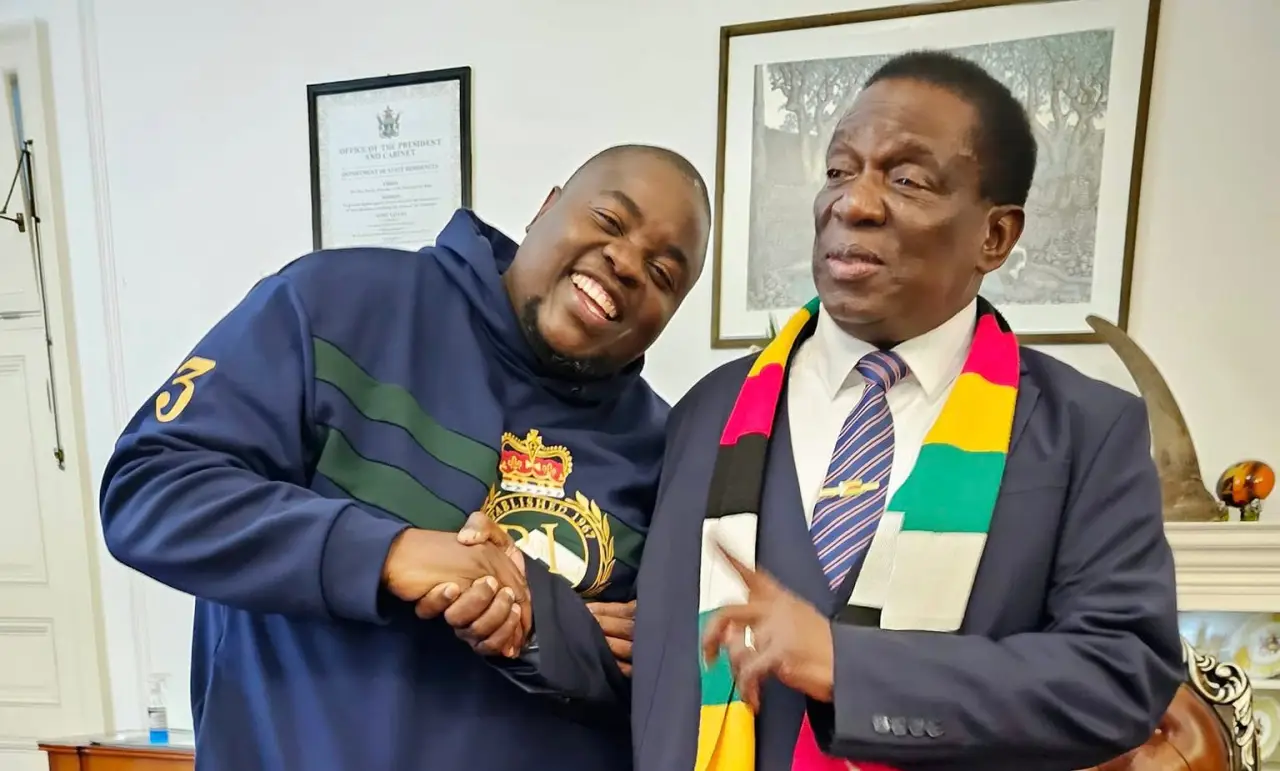
Under the guise of charity, these individuals distribute luxury vehicles to influencers, musicians, soccer players and religious leaders to mention but a few. These displays occur against a grotesque backdrop of collapsed hospitals, lethal infrastructure, and mass unemployment.
The Illusion of Generosity
When recipients challenge these “gifts”, noting that such resources could refurbish schools or clinics, the state’s response is telling: “I will use my money the way I want.” While legally defensible, this stance is morally hollow.
When wealth accrues through proximity to power and opaque dealings, the claim to private discretion collapses. What the state presents as generosity is actually a mechanism for political bribery and psychological manipulation of the same poor people the state has made poor.
The President personally participates in this theatre, donating vehicles to public figures with significant followings and twerking women, and wives. This is not development; it is spectacle.
Rather than fostering an economy where citizens can produce and innovate, the state presides over collapse and then assumes the role of benevolent saviour of the same people it has impoverished. This shift reduces the citizen from an active participant to a passive recipient.
The Erasure of Human Agency
Human purpose requires agency. As V.S. Naipaul explores in A House for Mr Biswas, humans possess a fundamental need to “paddle one’s own canoe”, to build and grow through individual effort.

Dignity is forged, not bestowed. A system that strips people of the opportunity to grow through responsibility is not merely inefficient; it is dehumanizing.
The current socio-political model corrodes this humanity. By replacing economic opportunity with state-sponsored gifts, the regime violates the citizen’s right to self-determination.
Work serves as a pathway to dignity and self-actualization; when the state blocks this path, the psychological damage is profound.
Citizens are conditioned to beg and praise power in hopes of being “noticed,” so they may get cars and money and forget about their humanity and that of others near them.
The Rise of Cargo-Cult Politics
A growing constellation of politically branded groups, Women for ED, Youth for ED, Pastors for ED, Former soccer players and coaches for ED, reinforces this culture.
The manipulation is crude: “ED” is rhetorically rebranded as “Economic Development,” though it serves only as an acronym for the President’s name, Emmerson Dambudzo. This collapses identity and economic hope into loyalty to a single individual.
The result is a “cargo-cult” politics:
Rituals of Loyalty: Performed in anticipation of material rewards.
Detachment from Merit: Rewards descend from above regardless of productivity.
Subservience: The citizen’s role shifts from innovator to slogan-chanter.
A Comparative Indictment
A comparison with colonial Rhodesia sharpens this indictment. While Ian Smith’s regime was racist and morally bankrupt, it rationalized Black exclusion through paternalistic myths of incapacity.
Smith exploited labor; Mnangagwa’s system destroys agency itself. Colonialism denied participation, but the current regime simulates it while hollowing it out, replacing growth with dependency.
William Shakespeare’s King Lear warns that power insulating itself from the poor becomes monstrous. Zimbabwe’s leadership does not merely ignore the “wretches”; it instrumentalizes their suffering.
As Frantz Fanon and Walter Rodney argued, the oppressed are not just economically deprived; they are psychologically wounded. When denied agency, people internalize passivity.
Conclusion: The Stakes of Resistance
Fear remains a central tool of the state. Mnangagwa’s tenure is inextricably linked to repression and the memory of the Gukurahundi massacres. In this environment, silence is a survival strategy, not consent. However, Zimbabweans must not allow fear to dictate the future.
The fundamental issue is the type of society that will emerge: a nation of self-actualizing citizens or an infantilized population dependent on patrons.
To name this problem is the first act of resistance. Zimbabweans deserve the dignity of struggle and the right to become fully human through their own efforts. Anything less constitutes a betrayal of the future.
Bhekilizwe Bernard Ndlovu is a Mental Fitness Coach and Mental Fitness Researcher, PhD Candidate (Wits University, SA)

