



Demand for answers as shadowy US$16 billion Mutapa Fund delivers ‘zero’ revenue


HARARE – The Mutapa Investment Fund (MIF) is facing intensifying scrutiny from governance experts and political commentators who argue that the fund is failing to deliver on its promise of generating national income, despite controlling state assets reportedly valued at US$16 billion.
The debate has resumed in the wake of the 2026 national budget, which remains overwhelmingly dependent on consumption taxes, with analysts noting that the MIF has not contributed any meaningful revenue to Treasury.


Economist Chenayi Mutambasere questioned the fund’s relevance to national budgeting. She added that the fund’s tax-exempt status raises equity concerns.
She asked: “The whole point of the Mutapa Fund is to unlock revenue, yet we are still relying on consumption taxes. Where is the revenue from this so-called US$16 billion asset?”
“We are taxing informal traders who make a dollar a day selling maputi, while a multi-billion-dollar state entity pays nothing. How is that justifiable?”

Mutambasere was responding to renowned economist Professor Gift Mugano who has claimed that the MIF was a “gamechanger”.
“As a person who had initially dismissed the MIF, I went into the meeting as a doubting Thomas but I came out of the meeting as a convinced and converted person.
“From today, I can speak and argue with facts on why the MIF is a game changer,” Mugano claimed.
But analysts have constantly raised concerns over the financial structure behind the fund’s expansion, which they claim has contributed to rising public debt.

“It is misleading to call the MIF a game changer when it is heavily geared,” Mutambasere said.
“Its growth has been financed through borrowing; more than US$3 billion has been added to public debt, including the US$1.6 billion Kuvimba acquisition. This worsens debt distress instead of easing it.”
Legal and governance experts have long been alarmed by the fund’s structure, which they say shields it from public scrutiny.
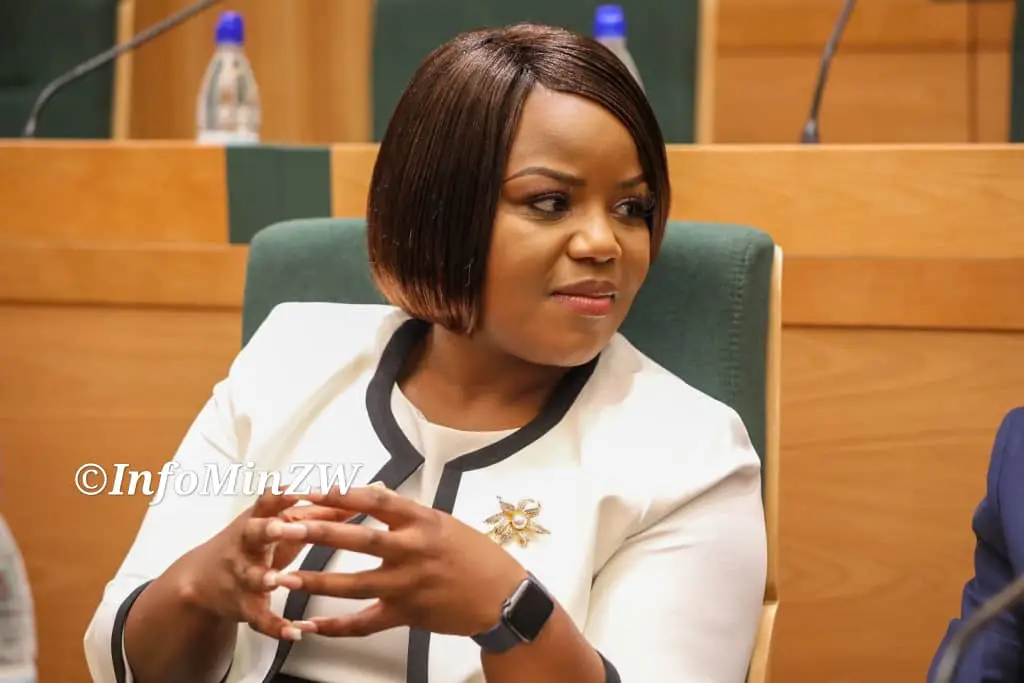
Former Mt Pleasant MP Fadzayi Mahere reiterated her earlier concerns, arguing that “the fund operates opaquely, managing millions in state assets with zero accountability.
It does not report to Parliament, all key appointments are made solely by the President, and employees are sworn to secrecy. This undermines every principle of sound corporate governance.”
She added that the exemptions granted to the MIF, including from public procurement laws and exchange control regulations, create opportunities for looting of public resources.
“The Fund is exempt from public procurement legislation which exposes all state entities controlled by it to abuse through corrupt contracts which could lead to further looting of public funds through inflated or unfulfilled contracts.
“There is a real risk and possibility that the assets and entities held by the Fund will be sold without the benefit of public or parliamentary scrutiny or the necessary checks and balances necessary to ensure sound corporate governance and prevent abuse,” the outspoken politician stated.
The absence of a publicly confirmed valuation of the fund’s assets has fuelled further doubt about its transparency.
Parliamentary attempts to obtain clarity have been unsuccessful.
The US$1.6 billion Kuvimba buyout, funded through treasury bills, has also come under scrutiny, with analysts questioning how a single transaction of that size fits into the claimed US$16 billion overall valuation.
Mahere warned that without transparent reporting, clear revenue streams or parliamentary oversight, public trust in the MIF will continue to decline.
“It’s a mess,” Mahere said. “If this continues, one day Zimbabweans may wake up to find that national assets have been stripped or sold.”


