


The exchange between musician Greatman Tongai Gwaze and former opposition legislator Fadzayi Mahere has become more than a viral moment on social media.
It is a lens through which Zimbabwe’s fraught politics, fragile welfare systems, and the performative theatre of charity can be examined. This is not only a story about 20 wheelchairs. It is a story about optics, power, moral authority, and the human cost of systemic failure.
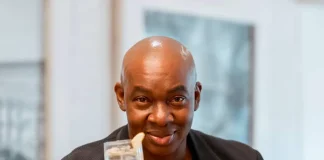
On 26 November 2025, Greatman, who lives with muscular dystrophy and is a prominent figure in Zimbabwean music, received 50 wheelchairs and brand new Mahindra vehicles from President Emmerson Mnangagwa at a highly publicised event.
The gesture was framed as support for disabled content creators.

Images of Mnangagwa personally wheeling Greatman circulated widely, with social media commentators praising the president’s compassion. Yet to others, the spectacle appeared as political theatre, with disability and mobility reduced to props in a photo opportunity.
Earlier, Vice President Constantino Chiwenga’s wife, Minnie Baloyi, had quietly donated 20 wheelchairs and US$2000 to Greatman’s initiative.
Her act, largely unpublicised, underscores the disparate scale and visibility of charitable contributions in Zimbabwe where some aid is quietly effective and other aid becomes highly symbolic.
Just days after the presidential event, Greatman publicly requested that Fadzayi Mahere donate 20 wheelchairs to his foundation. His open letter was polite but loaded with implication: the critic of the ruling party should demonstrate moral equivalence by participating in charity.
This appeal immediately sparked debate. Was it a legitimate request from a community leader, or a strategic move leveraging a public figure to counter opposition critique?
Mahere responded on X, formerly Twitter, with a scathing critique of Zimbabwe’s disability support system rather than a direct pledge. She highlighted the lack of a robust policy framework for the 9,5 percent of Zimbabweans living with disabilities.
She noted that taxation on wheelchairs and Braille materials continues even as billions are lost annually to corruption. She warned the disabled community not to be manipulated by political spectacle, stating that systemic reform is more important than episodic handouts.
From one perspective, Greatman’s request was understandable. He is a disability rights advocate striving to meet urgent needs in a country where social welfare structures have largely collapsed. Immediate aid saves lives and improves mobility in the here and now.
For beneficiaries, 20 wheelchairs are transformational. From another perspective, Mahere’s response aligns with long-term justice. It exposes systemic failures and reframes the conversation around institutional accountability rather than individual generosity.
Yet this is where the debate becomes complicated. Mahere’s critique, while principled, also introduced an element of coldness that cannot be ignored. After all the threads about policy and dignity, imagine if she quietly returned and purchased one or two wheelchairs herself.
Overnight, the narrative could have shifted dramatically. Optics matter in politics, particularly in Zimbabwe where leaders are often judged by gestures more than philosophy. A small act could have amplified her message while demonstrating compassion in practice.
Instead, her refusal opened her to criticism. Some citizens viewed her as distant, out of touch, or elitist. Polished threads appeared as shields for something less noble. Lecturing a nation grappling with basic survival while a man publicly asks for mobility is a risky move.
Timing, audience, and empathy are critical in politics. Zimbabweans, exhausted by decades of mismanagement and performative leadership, want public figures who can blend principle with tangible compassion.
Mahere’s stance, however correct analytically, risked alienating the very constituency she aims to represent. The saga reinforced doubts about whether she fully grasps the everyday realities of those she seeks to champion.
At the same time, the criticism of Mahere is not absolute. Her refusal underscores a fundamental truth. In Zimbabwe, systemic failures cannot be solved by the generosity of a few.
Charity from leaders, while well-intentioned, often acts as a veneer that masks institutional rot. State-funded handouts, flashy events, and photo opportunities substitute for policy, infrastructure, and rights-based inclusion.
Greatman, in alignment with state benefactors, is simultaneously a voice for the disabled and a participant in a theatre that highlights the gaps left by governance failure.
Analysing the positions side-by-side reveals a tension between principle and pragmatism. Greatman prioritises immediate relief, using visibility and state support to meet urgent needs.
Mahere prioritises structural justice, advocating for long-term solutions over episodic philanthropy. Each position has pros and cons.
Wheelchairs today save lives and improve independence today, but reliance on private actors and political optics risks entrenching inequality and dependency. Critique alone exposes problems but risks appearing cold or detached from human suffering.
Zimbabwe’s disability sector remains precarious. Census data shows high levels of visual and physical impairment, especially in rural areas where mobility aids are scarce. Only one in three disabled children attends school.
Social welfare offices are underfunded and largely invisible. Tax policies make assistive devices more expensive, while corruption siphons billions that could fund a national disability register, grants, or accessible infrastructure.
Against this backdrop, Mahere’s refusal emerges as a principled stance, but it is inevitably weighed against human empathy and public perception.
The broader implications extend beyond this saga. The political playbook is evident. Use generosity to curry favour, target opposition figures with public appeals to reinforce dependency narratives, and manage optics while leaving systemic issues unresolved.
Mahere’s stance challenges this model, but it also exposes her to charges of tone deafness. Zimbabweans often judge leaders less by arguments won than by moments fumbled.
The refusal to meet Greatman’s request, however justified in principle, becomes a symbolic misstep that will be remembered as much as her critique.
Ultimately, the Mahere-Greatman episode is both a cautionary tale and a case study in governance, politics, and optics. It demonstrates the collision of principle and pragmatism, charity and justice, optics and substance.
Greatman’s initiative is noble and urgently needed. Mahere’s critique is rigorous and essential. Yet both are entangled in a context of political theatre, structural neglect, and public scrutiny.
Zimbabwe will continue to oscillate between symbolic generosity and real systemic reform. Until the country builds institutions that guarantee rights over handouts, such episodes will recur, leaving the disabled caught between policy debates and immediate needs.
Gabriel Manyati is a hard-hitting journalist and analyst delivering incisive commentary on politics, human interest stories, and current affairs.








There's a dimension where if Fadzie takes the bait, she would be trapped in every optics to give in every ransom that is thrown her way. And appearances are not the priority, she could very well be involved in anonymous charity. Meanwhile, planting the seeds of analysis is a great service to prevent one dimensional thinking and seeing disparity in giving as charity
The ask by Greatman was meant to subject Mahere to redicule. Since when a beggar is a chooser? The now being espoused by some that Mahere lack empathy is exactly reason we are here. Zimbabwe is in perpetual election mode largely because of the now. Suddenly Mahere has to show empathy and take the poisoned bait, meanwhile the Minister responsible for social welfare is not resigning for failing to show empathy, compassion and commitment to uplift the less fortunate and fundamentally those living with disabilities.
The Presidency chose to circumvent the parent Ministry and directly poured assistance into one charity. That generated this noise. His advisers should honourably acknowledge structural failures and resign. The fanatics in ZANU PF immersed in their hatred for Mahere inadvertently exposed Zanu PF failings. ZANU PF is the government. If Greatman did pen the ask, it’s unfortunate to say the least but if someone did for him it’s criminal and cruel