



Red Soil Revolution: Inside Zimbabwe’s hidden gem redefining rural education

When you drive past the quiet outskirts of Chisipite toward Goromonzi, the landscape shifts from the manicured comfort of the city to the open sprawl of farmlands and villages.
Here, amid the neat rows of maize and the rhythmic hum of daily rural life, something extraordinary is happening.
Beyond the gravel road and over the soft rise of red earth stands Chivaraidze Primary School, a place that defies every stereotype about what a “rural school” should look like.

This is not a makeshift cluster of dilapidated classrooms or an underfunded satellite outpost. It is a vision rendered in brick, steel, and purpose – a rural innovation hub dressed as a school.

In just two years since its founding, Chivaraidze has produced a 92 percent Grade 7 pass rate, sent learners to international robotics competitions in New Delhi, India, and fielded debate teams at Pan-African tournaments in Kenya.
Its pupils learn coding, robotics, and problem-solving alongside Shona literature and environmental science.
Yet its greatest triumph lies not in the statistics, but in the setting. This school, born out of farmland and vision, now stands as Zimbabwe’s most compelling case study in inclusive excellence.
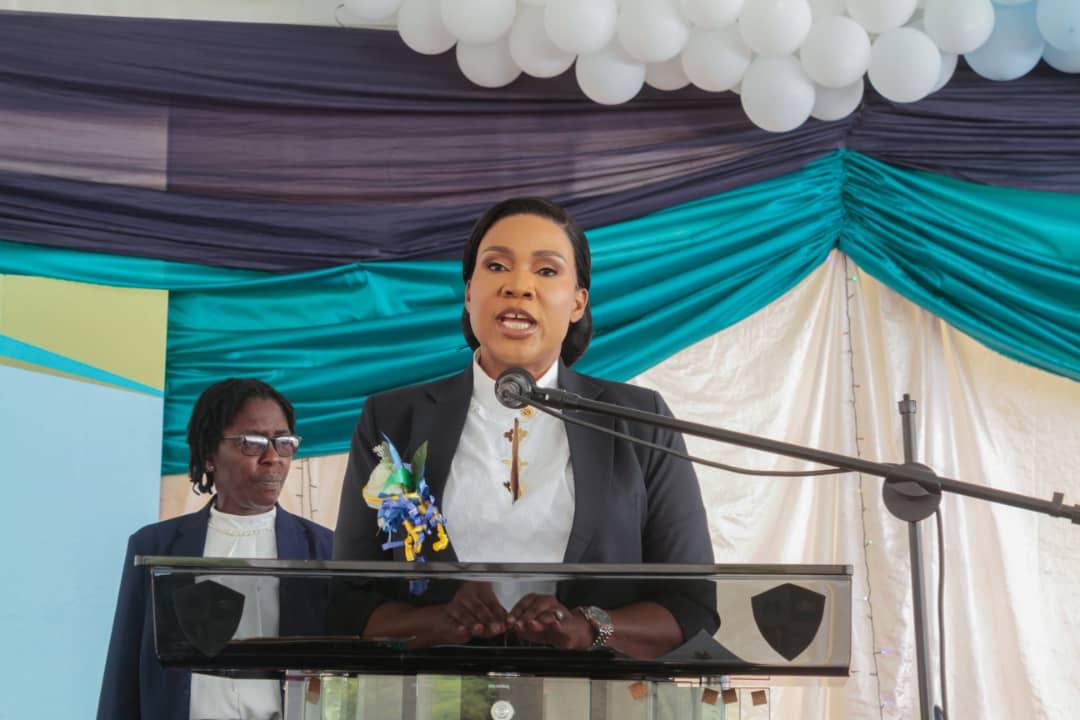
At the heart of this quiet revolution is Mrs Miniyothabo Baloyi-Chiwenga, the school’s founder and guiding force. She is not your typical educationist.
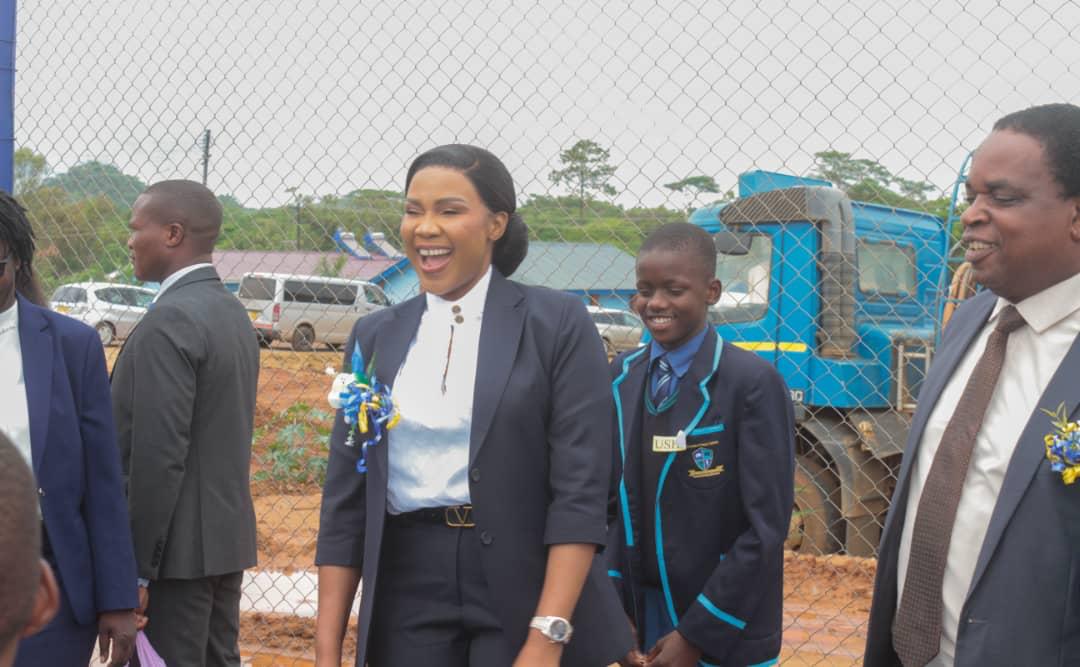
A decorated soldier, development scholar, and philanthropist, Baloyi has lived at the intersection of power, intellect, and social conscience. She is also, in her own understated way, a reformer.
Those close to her say Chivaraidze is not a vanity project but a mission. “She’s building a bridge between privilege and disadvantage,” says one teacher. “You can feel it in everything the school does.”
Baloyi’s philosophy is simple but radical: every child, regardless of circumstance, deserves access to world-class education. That conviction is visible in every corner of the school’s design, from its smart classrooms and computer labs to its social welfare programmes.
Under her leadership, Chivaraidze has developed a two-tier model that merges elite-quality instruction with social inclusion.
Children of farmworkers pay as little as US$15 per term, while those from wealthier families pay full tuition. The higher fees subsidise the lower ones.
In addition, an “Adopt a Child” initiative allows donors and well-wishers to sponsor pupils who cannot afford even the subsidised amount.
This financial structure means that Chivaraidze operates as a self-sustaining social ecosystem, not a charity – a model that might well inspire policy reform if replicated nationally.
The first thing visitors notice is that Chivaraidze doesn’t look rural. Wide lawns, fresh paint, clean corridors, and neat signage greet you at the gate.
Inside the classrooms, interactive lessons play out on smartboards, while learners work in teams to build small robots or design irrigation models. The school’s STEM centre is fitted with robotics kits, computers, and 3D learning aids – rare assets even for most urban schools.
It was these very learners who represented Zimbabwe at the Avishkaar Game League Robotics Competition in India, a remarkable feat for a school barely out of its infancy.
Photos from the event show the young Zimbabweans proudly displaying the flag in New Delhi – the only rural-based team in attendance. Back home, their success has inspired a generation of parents who once assumed such opportunities were reserved for Harare’s elite schools.
The school’s culture of curiosity extends far beyond robotics. Learners engage in Model UN simulations, Pan-African debates, and community innovation fairs where they design solutions to local challenges such as water conservation or waste management. It is education for relevance, not rote.

Baloyi calls this the “Chivaraidze Method” – teaching children to think critically, act ethically, and dream audaciously.
Chivaraidze’s ethos is deeply anchored in moral purpose. While its aesthetics resemble an international academy, its soul is rooted in hunhu/ubuntu – the African humanist principle that one thrives only when others do.

Teachers describe their work as a calling. Some were handpicked from government schools, others from private academies, all united by a shared belief in transformative education. Staff meetings often begin with a reminder: “We are here to build futures, not reputations.”
The school’s operations reflect that spirit. Each term, part of the revenue is allocated to a uniform and learning-materials fund for disadvantaged pupils. No child is sent home for fees.
Baloyi herself is known to quietly settle arrears when parents fall behind. These acts rarely make it onto social media; they are done as part of the school’s quiet covenant with its community.
Success breeds ambition, and Chivaraidze is no exception. In 2024, the school expanded its vision by launching Chivaraidze Academy, a secondary arm specialising in science, technology, engineering, and mathematics.
The goal is to create a continuous academic pipeline from early childhood to upper secondary – all guided by the same principles of inclusivity and innovation.
The planned expansion includes a solar-powered science park, a coding lab, and a research farm where students will apply technology to sustainable agriculture.
The school’s leadership envisions an environment where a child from a farmworker family could one day become an engineer, agronomist, or tech entrepreneur without ever leaving the rural community that raised them.
Baloyi has described this as “turning the village into the campus.” It is a poetic summation of her belief that development must begin where people already are, not where elites imagine them to be.
Chivaraidze’s rise cannot be separated from Zimbabwe’s wider socio-political story. Since the political transition of 2017, education has become both a battleground and a barometer of reform.
The country’s system has long struggled with uneven access, decaying infrastructure, and deep rural-urban divides.
Chivaraidze arrives as a symbol of what reimagined leadership can produce. It fuses the efficiency of private enterprise with the moral mandate of public service. It reflects an emerging post-2017 narrative that seeks to blend empowerment with modernisation.
In that sense, Chivaraidze is not just a school, it is a microcosm of national renewal. It represents the idea that progress in Zimbabwe will not only come from policy papers and donor funds, but from localised acts of leadership that turn vision into tangible transformation.
Miniyothabo Baloyi-Chiwenga’s biography reads like a study in duality. Born in Matabeleland, she rose through the ranks of the Zimbabwe Defence Forces, earned advanced degrees in International Relations and Development Studies, and became one of the most quietly influential women in the country. She is known for discipline, intellect, and discretion – qualities that have made her an effective reformer in spaces where others merely theorise.
Her investment in education is personal. Having seen both the privilege of access and the pain of exclusion, she set out to create a model that collapses those two worlds into one. To her, Chivaraidze is not an ornament of power but a moral obligation.
“She believes that privilege must have purpose,” says one senior teacher. “That is why the school feels so alive. It’s built on conviction, not convenience.”
On a typical morning, the gates open at dawn. A school bus rumbles in from the main road, dropping off uniformed learners with shining faces. Some arrive barefoot, others clutch robotics kits or debate folders. There is no visible hierarchy, only a collective sense of belonging.
Classes begin with morning assembly under the jacaranda trees, where children recite affirmations in English and Shona.
Later, a robotics team fine-tunes a solar-powered irrigation prototype for an upcoming science fair, while across the field, a group rehearses traditional Mbira music for cultural day. Teachers move between classes with tablets, guiding pupils through digital lessons.
At lunchtime, children share snacks on the lawn. The laughter carries across the grounds, mingling with the hum of the surrounding farm. It is hard not to feel that something sacred is taking place here – the quiet rebirth of possibility.
Like any ambitious institution, Chivaraidze faces challenges. Expansion requires funding, technology upkeep, and regulatory approvals. Its official registration is under the Ministry of Primary and Secondary Education, though formal public listings are not yet available online.
The ZIMSEC Grade 7 results that produced the famous 92 percent pass rate are awaiting full publication for national record, though the school retains its internal result slip for verification.
Yet these gaps hardly diminish the substance of its achievements. Transparency is being built into the system, and Baloyi’s team is already engaging with education authorities to formalise every layer of governance.
For a school so young, such rapid evolution is nothing short of remarkable.
The next few years will be decisive. Chivaraidze plans to roll out Cambridge-aligned STEM streams, attract international education partnerships, and establish a teacher training institute on-site to replicate its model nationally.
But beyond infrastructure and accolades, its deeper legacy may be philosophical. Chivaraidze insists that rural is not backward, and excellence is not urban. It is a subtle but seismic shift in how Zimbabwe conceives of education.
If the school continues on its current trajectory, it could well become a template for national reform – a living case study in how leadership, vision, and compassion can converge to produce systemic change.
As the afternoon sun dips behind the gum trees and the chatter of children fades into the fields, one senses that this small community school has already changed more than minds. It has changed expectations.
And perhaps that is Chivaraidze’s greatest lesson of all: that in the heart of rural Zimbabwe, on land once written off as peripheral, the future of education has already arrived.
Gabriel Manyati is a hard-hitting journalist and analyst delivering incisive commentary on politics, human interest stories, and current affairs.

