HARARE – Contrary to recent denials by the Reserve Bank of Zimbabwe (RBZ), President Emmerson Mnangagwa reportedly ordered the sale of the People’s Own Savings Bank (POSB) to a private investor.
A presidential directive, dated February 12, 2025, outlines Mnangagwa’s plan to partner with a private investor to capitalise, manage, and operationalise the POSB.
Mnangagwa, according to the directive, believes that the transaction is part of a broader initiative to support Zimbabwe’s socio-economic and sustainable development.
“I ordered a three-pronged policy to support my initiatives for a prosperous upper middle-income society by 2030.
“Setup a partnership with a private investor to capitalize, manage and operationalize the POSB. Put in place a special team to enable amongst other things, the socio-economic and sustainable development initiative for Zimbabwe.
“Its aim being to process payment of arrears and future improved salaries of civil servants, members of parliament, armed forces as well as war veterans welfare; unemployment; job creations; healthcare coverage; grants and tuition assistance for low income university students; small business loans; secured centralized system for revenues collection to eliminate misappropriation of government’s funds and ensure funding of the socio-economic and sustainable development of Zimbabwe, as well as the immediate amelioration of the living conditions and quality of life of all Zimbabweans.
“Timely investigate, report progress, and recommend appropriate legal actions for accountability,” read part of the directive.
The sale has been shrouded in controversy, with reports suggesting that Mnangagwa handpicked Hebrew Investment Group as the investment partner without a public bidding process.
The group, led by CEO Professor Emile Kue, is allegedly set to acquire a 70% stake in POSB by contributing $70 million towards the bank’s recapitalization.
Reports further indicate that the Zimbabwean government would retain a 10% stake using existing POSB assets, while private investors would contribute the remaining US$20 million for a 20% stake.
A joint venture agreement also outlines a US$6 billion loan from Hebrew Investment Group to the Zimbabwean government, repayable over 30 years.
The RBZ had previously denied reports of the sale, stating that it had not received any application or directive regarding the sale of POSB. But, the presidential directive appears to contradict this claim.
“The Reserve Bank categorically states that these claims are false and has not received an application from any investor for the purchase of POSB, neither has it received any correspondence from any Zimbabwean Government authority, including His Excellency The President.” RBZ stated.
“If there had been any directive for the sale, it would have had to be addressed to the Reserve Bank as the approving authority.
“We can categorically confirm that the Reserve Bank never received any such directive, neither has it processed any application from the named investors.
“Accordingly, any reference to the purported sale of POSB cannot be true as the sale cannot be consummated without Reserve Bank approval.”
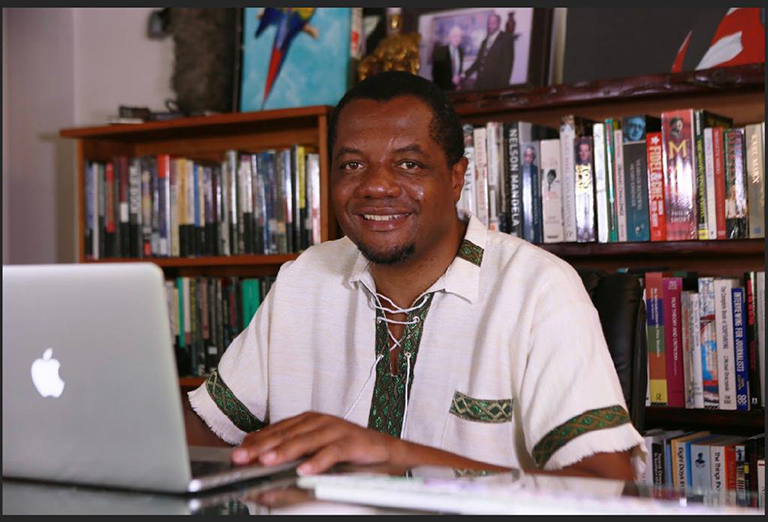
Prominent anti-corruption journalist Hopewell Chin’ono weighed in on the matter and published some of the documents leaked by political activist Jealousy Mawarire.
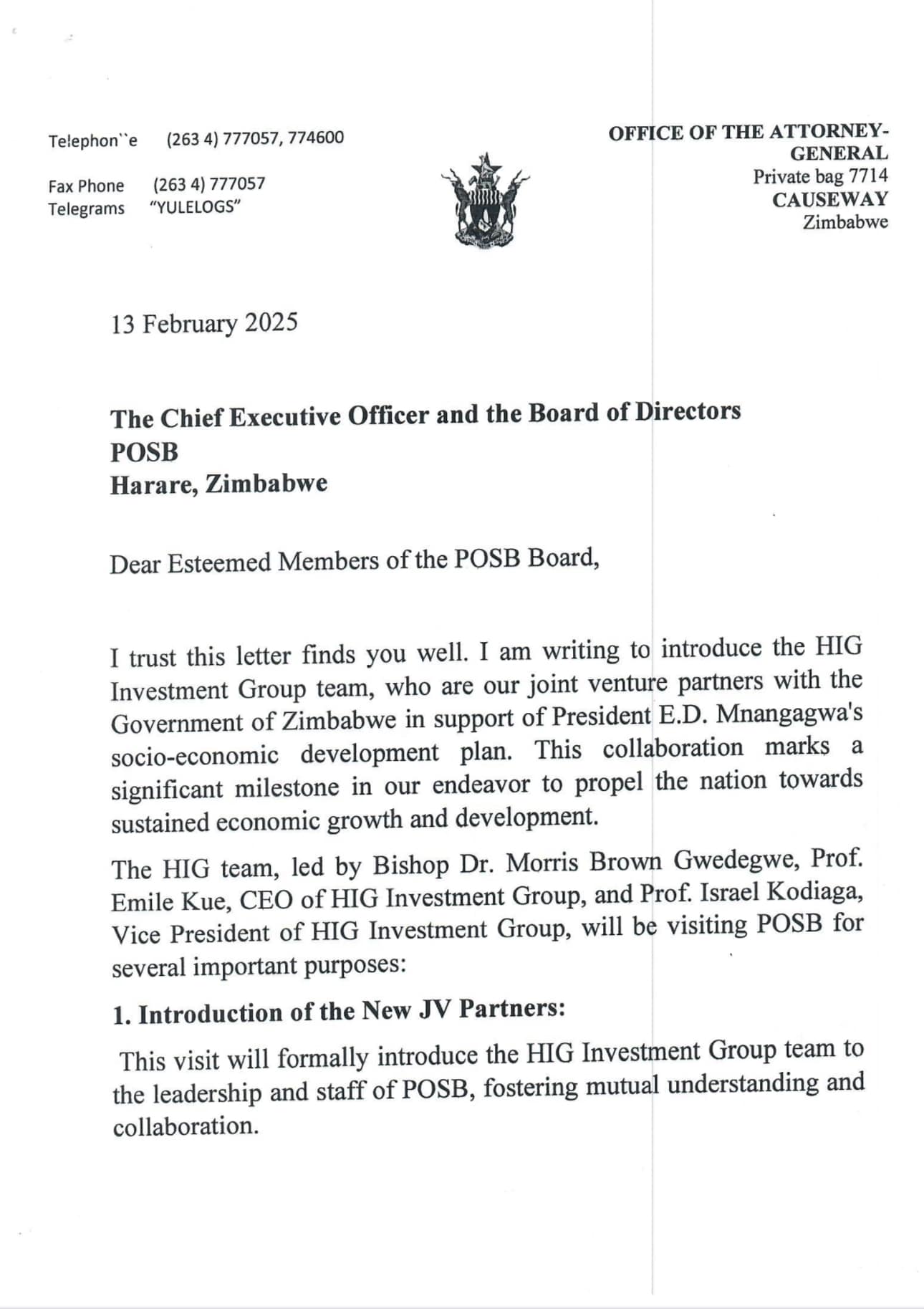
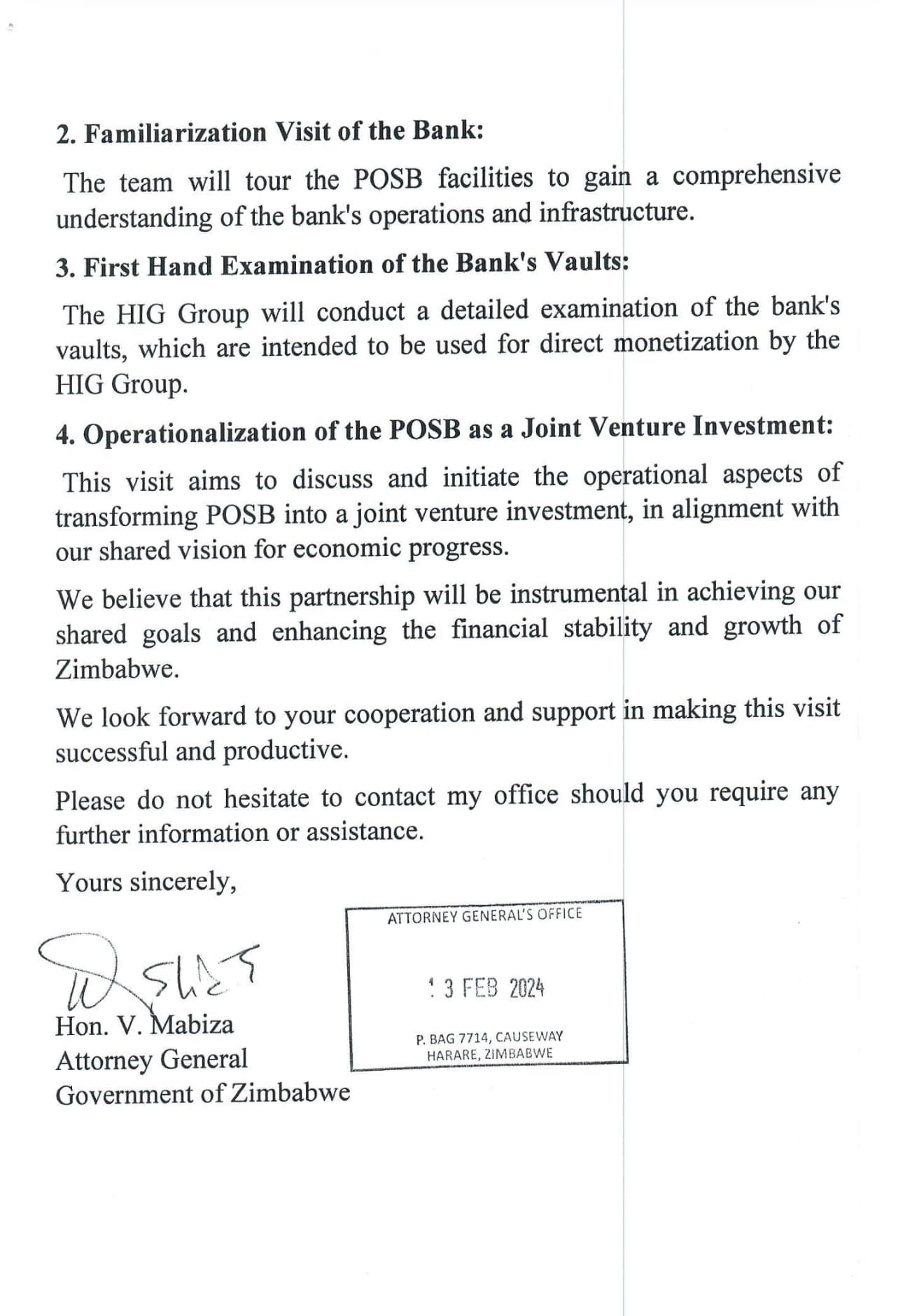
“Consequent to President Mnangagwa’s corrupt directive to Zimbabwe’s Attorney General and his trusted aide for years, Virginia Mabhiza, to create a pathway to steal the Post Office Savings Bank (POSB), the Attorney General wrote this letter to the Chief Executive Officer of the bank.
“The aggressive letter was labelled CONFIDENTIAL to prevent the details from being leaked.
“She instructed the CEO to work with the so called HIG Investment Group, fronted by one of Mnangagwa’s corrupt lieutenants, Morris Brown Gwedegwe.
“Morris Brown Gwedegwe was expelled from the Anglican Church over allegations of embezzlement. Despite this, in May 2019, President Emmerson Mnangagwa appointed him to the Zimbabwe Defence Commission.
“In October 2022, Gwedegwe attended the ZANU PF 7th National People’s Congress, claiming to represent the Zimbabwe Council of Churches (ZCC). The ZCC later disassociated itself from him, stating that they had not sent any representative to the event.
“Mabhiza instructed the POSB CEO to open the bank’s vaults to Gwedegwe and his team. Bank vaults store valuable items such as cash, which includes large sums of money that need to be securely stored. They also hold important documents, including legal papers, contracts, and deeds.
“Gold and precious metals, such as bars, coins, and other valuable metals, are also commonly stored in vaults.
“This scandal is the real reason why Zimbabwean journalist and now political prisoner Blessed Mhlanga was arrested and jailed, after he gave a television platform to Jealousy Mawarire, who blew the whistle on this attempted bank theft during Mhlanga’s programme.
“I will share more documentation (on this scandal) that has been given to me by government officials who are fed up with Mnangagwa’s looting and plundering of state assets using criminal elements purported to be businessmen,” Chin’ono wrote.
Discover more from Nehanda Radio
Subscribe to get the latest posts sent to your email.