By Takura Zhangazha
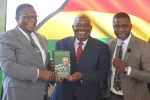
Blessing Miles Tendi’s biography of late national hero Solomon Mujuru, better known by his liberation war nom de guerre Rex Nhongo, is a riveting read.

Not just because of its subject matter but more because of the uniqueness in which the biography is written. A mixture of the personal with political history, it is a biography that gives a relatively holistic perspective of Zimbabwe’s liberation struggle.
Without skirting the controversial issues thereto. Or on our post independence politics. Tendi’s narrative weaves Mujuru’s life into the arenas of Zimbabwean state-making, liberation struggle/military history, post independence politics including personal fall-outs within the ruling Zanu PF establishment and finally an unforeseen and horrific death.
What is more interesting is a different perspective on what were Mujuru’s motivations for the actions he undertook at various stages in his life. Tendi uniquely looks at possible reasons for specific key decisions that Mujuru made over the course of his life.
This focus on agency seeks to not only humanize Mujuru beyond the myth and present what would be a thorough and candid perspective on the man’s actual life. Including descriptions of Mujuru’s personal life such as his philandering and alcoholic tendencies.
It is borderline a psycho-social analysis of the late national hero. A rare angle at writing a biography of Zimbabwean public figures. And one that must be applauded.
There are three issues that stood out for me in the biography.
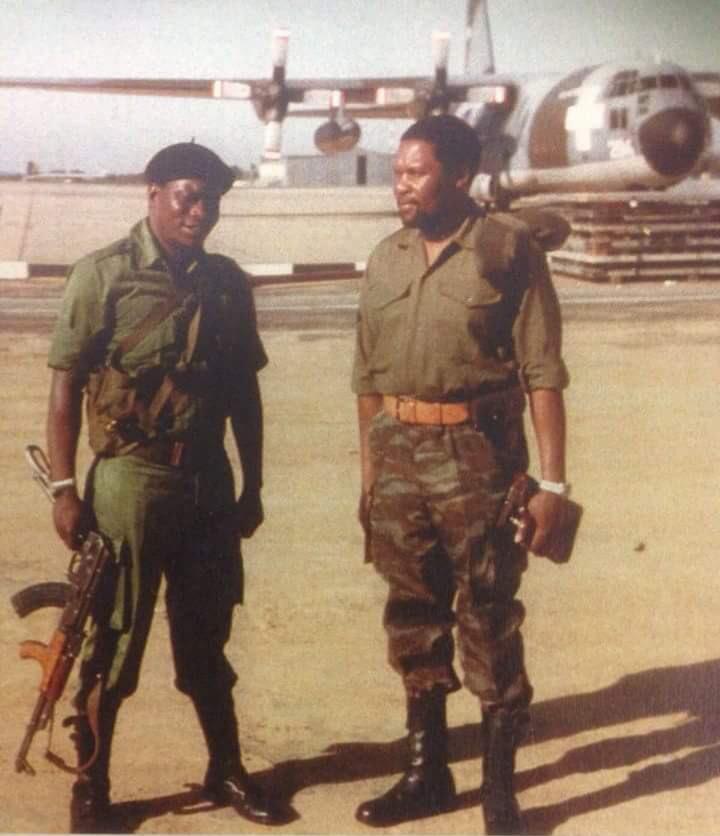
The first being that Mujuru is presented as a man driven by cause. That is, a young man motivated by a desire to end colonialism and racial discrimination from his early years in high school under the night time tutelage and activism of Kumbirai Kangai. Through to his years in Bulawayo where, with his brother cautioning him against joining the Zimbabwe African People’s Union (ZAPU) nationalists , he still persisted.
Even though, as described by Tendi, his intellect was limited based on late enrollment in school and a poverty stricken childhood and a lack of confidence due to stammering. This determination and motivation by cause found its form in Mujuru becoming an ‘action man’ which suited, as is given in the book, his eventual military training in Zambia.
It was a pragmatism, as outlined by Tendi that would make him initially view the struggle in less politically partisan terms. With a strong desire to act more than politic. Hence his defection from Zimbabwe Peoples Revolutionary Army (ZIPRA) to Zimbabwe African National Liberation Army (ZANLA). Which was apparently motivated by the fact that he wanted to fight as opposed to waiting on the political leaders to resolve their differences.
His commitment to struggle was beyond doubt. It was not, according to Tendi, ideological but more pragmatic. Mujuru’s sterling work on expanding and also being at the war front made him legendary among the Zanla guerillas.
Tendi however makes it clear that Mujuru was however also a schemer of note. His interventions in supporting Mugabe against the wishes of Samora Machel and Julius Nyerere proved to be one of his most strategic master strokes even though he disavowed the Mgagao declaration.
The formation of the amalgamated Zimbabwe People’s Army (ZIPA) was also indicative of his focus on military action in order to further the liberation war. And when that appeared to no longer work, he was quick to follow the political leadership of the Dare’s directive to focus on ZANLA once again. A sore point for some of his former comrades such as Dzinashe Machingura.
Tendi emphasizes that Mujuru sought more to seek the best and most pragmatic way to win the war or to at least make it more effective. And that the majority of his actions during the liberation war never lost sight of that. He had an avowed commitment to fight.
The second matter that stands out from the biography is Mujuru’s apparent pursuit of recognition. From the beginning Tendi makes it apparent that Mujuru would make up for his flaws through his physical abilities and doing the extraordinary or unexpected.
One anecdotal moment in the book is when Tendi describes how Mujuru successfully courted one of the most beautiful girls in his village against the expectations of his brother and sister.
In his military training he didn’t exhibit all of the intellectualism of his peers but focused at excelling in his military role. All not so much to be considered normal but more exceptional. But all within the ambit of the liberation struggle’s ethos and progress.
This tendency was what got him recognized as a leader not only by the liberation fighters but also by Nyerere and Mbita ( the latter headed the OAU’s Liberation Committee).
Tendi also outlines the pragmatic relationship that appeared to have developed between Tongogara and Mujuru with the former recognizing in part the former’s more hands on approach to revolutionary war. And this brings us to a point where Mujuru becomes Tongogara’s successor by default due to the latter’s death in an accident.
Mujuru would be the commander of ZANLA during the demobilization process. Tendi accounts for this role by lucidly explaining Mujuru’s interaction with generals that formed the Commonwealth Monitoring Force (CMF).
While he was able to charismatically persuade unsettled ZANLA guerillas to go to Assembly Points he also strategically ensured others would stay in the villages mobilizing for Zanu Pf for the forthcoming elections. And also telling his counterparts in the CMF that the former would win the general election.
What however stands out is how Mujuru sought to get out of what Tendi refers to as the Fanonian ‘white gaze’. Mujuru was not looked upon as a typical general by his white peers on the CMF and some of them said as much in interviews with the author. Mujuru held great disdain for any signs of disrespect and or a lack of recognition of his role in the liberation struggle.
A third and final point from reading Tendi’s biography of Mujuru is his post independence role. What would make many a reader most curious would be what role Mujuru played in Gukurahundi.
Tendi explains that Mujuru may have had no direct role in Gukurahundi and that the notorious 5th Brigade reported mainly to either Mugabe and took orders from either the Minister of Home Affairs (Herbert Ushewokunze) or the Minister of State intelligence (Emmerson Mnangagwa). But that in any event Mujuru would be complicit in it.
What was however more interesting was Mujuru’s dalliance with the pursuit of individual wealth. It turns out he bought a decent amount of property.
This was particularly the case in Bindura which Tendi writes was jokingly referred to as ‘Rex’ town due to the amount of property he owned there. Tendi also writes that this desire for accumulation could have been motivated by the fact of his poverty stricken childhood and a desire to never let his own children get back to those levels of penury.
There may have been more to it but what is relatively clear from the biography is that Mujuru had developed close links with capital. And, as Tendi writes, the bad turn of the economy would have influenced his fall out with Mugabe and others in Zanu Pf.
Or his rumoured dalliance with the main opposition (Tendi writes that Mujuru would on occasion phone the late opposition leader Morgan Tsvangirai.)
His death in a suspicious fire is narrated in great detail. Especially the alleged missteps of the subsequent police investigation as well as Mugabe’s cold indifference in a cabinet meeting soon after the tragic incident.
*Takura Zhangazha writes here in his personal capacity (takura-zhangazha.blogspot.com)
Blessing Miles Tendi’s biography of Mujuru is available in Harare at Innov8 Bookshops.