By Tendai Muchada
Many thanks to the globalised world; I managed to participate through watching online, the press conference convened by the Minister of Local Government, Public Works and National Housing Hon Saviour Kasukuwere. All credit goes to the benevolent and patient lenses of Wellington Mahohoma’s nice gadgets [by the way it was his birthday, so I say happy birthday mate in this piece].
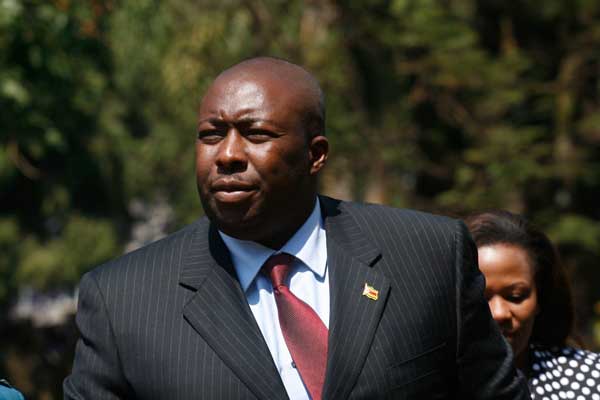
In this article, I take a deeper look at Kasukuwere’s statement, paying attention to the reinstatement of Josephine Ncube, which I think mirrors the minister’s concerns [not the ministry, I deliberately separate the two for purposes of analysis]. I try and unpack the creature called the City of Harare, deploying subjected lenses on interests and surrounding institutions.
I conclude that the press conference/statement resembles an omnipresent domination and power struggle between the centre and the periphery and the role of politics in service delivery which is the incarnation of bureaucratic decay in Zimbabwe’s local authorities.
The Power over and the Power to
Whilst this subtitle may not sound relevant, I thought it was the best way to understand the situation at our doorstep. Approximately 5 decades ago, Robert Alan Dahl a political theorist once wrote that “[his] my intuitive idea of power…, is something like this: A has power over B to the extent that he can get B to do something that B would not otherwise do”. This is my most profound basic understanding of power, that is power over and the power to. Power, in its generic sense, can easily be argued as being embedded in various levels.
The IDS argues that in today’s world, power is increasingly seen as multi-layered and multi-polar – that is, it is found across various levels and amongst state and non-state actors. In accordance with chapter 14 of the constitution, the Mayor of Harare has the power over his bureaucratic structure and likewise, he in consultation with his full council has the power to suspend or employ, which in this case he has done unsuccessfully.
Secondly, the minister of local government has in accordance with the urban council’s act, the power to rescind council resolution or action, which has been highly contested legally with the advent of chapter 14. The question to ask then is, if the minister of local government is not empowered by law to continue on his decree path, where does he get his power from?
In Zimbabwe’s local government structure, although it returns a representative architecture of elected officials with the power over appointed officials, it is the bureaucracy which returns power the “power to”, but it depends on the bureaucrat’s [the individual] political muscle and strength of relations with the patron, that is the minister who has “the power over local authorities”.
The Minister, although not directly working in the respective local authority, returns control and influence through remote controlling of bureaucrats. I cannot make universal claims on what they benefit from the council, but rent seeking cannot be dismissed.
The old testament of local government law had the Mayor as the executive head and that was changed in 2008 with the growth of control by opposition councillors in as many local authorities. However, there is a growing debate which I think has contributed to the failure of most local authorities regarding the interpretation of local government law.
Myself not being a lawyer, I wear political lenses to understand this. In his press conference, Minister Kasukuwere used section 314 (1) of the urban councils act which says “Where the Minister is of the view that any resolution, decision or action of a council is not in the interests of the inhabitants of the council area concerned or is not in the national or public interest, the Minister may direct the council to reverse, suspend or rescind such resolution or decision or to reverse or suspend such action”.
My thoughts and reflection on the press conference were immediately subjected to the interests of the minister himself. Harare is a very strategic organisation, with a huge annual budget of USD300 million. There are many day to day services that are provided through the outsourcing of private companies and firms.
Secondly, Harare being the capital city controlled by the Movement for democratic Change, any huge success in terms of service delivery, naturally has all kudos going to the Morgan Tsvangirai-led party. Thirdly, Harare owns land and in this article I need not specify how attracted ZANU PF big wheels are to amassing land, hence I’ll leave it there.
History provides us with empirical evidence through the 2010 land audit report which told us of how the then Minister of local government, Hon Ignatius Chombo amassed land equal to the size of 20 football pitches all for a song. This does not mean to say that the minister is not entitled to invest or buy land, he is also human but, my point is that there is a blurred line between the interests of an incumbent minister of local government and resources owned by a local authority.
With this and other examples, what we learn from this is that control of Harare City Council brings with it some economic and political incentives. Whilst one would think that the Mayor did the most honourable thing in suspending the acting T/C for prowling on council coffers, the domain of politics is there to answer on why the Minister would reinstate the acting Town Clerk.
The whole press conference saw the smuggling in of other agenda’s like transparency and accountability by the Minister, but his real and bold headline statement was to simply tell MDC-T that “you don’t jump the gun”. In the advent of chapter 14 one would only think that the logical flow of the bullets comes from the bottom to the top, but the other way round is the flow according to the minister.
His emphasis on “ill personally come to Town House”, cannot be decoded as being directed to the bureaucrats, but the MDC-T councillors who bear the brunt of shouldering council’s transgression even though they are not in control.
The legitimacy Question
I now turn from the power analysis to twinning the concept of power legitimacy. My ideation of power legitimacy is confined to the question of “whose authority really matters in local government”. In this case, my simple argument is that local government in Zimbabwe thrives on “rule by law” not the “rule of law”.
The laws come in different forms whereas, in some instances, the laws are more of hard, blunt and invisible, for example, Kasukuwere’s statements saying “you don’t jump the gun”. That statement simply becomes policy and this has been reinforced as far back as the 90s by scholars like Thomas Dye who argue that what government says can be prescribed as policy.
However, we also need to interrogate ourselves by asking if these bold statements are there to override laid down law? Local government being strategic in terms of its proximity to the people, any political party would want to retain control by hook or crook hence the system tends to relax its muscle on those presiding over it.
It is not lost on me that the incentive of the president or his party reigning in on Kasukuwere to respect the dictates of devolution for purposes of achieving the rule of law do not run deeper than taking the avenue of razzling and dazzling the law to maintain hegemony.
Hence, the system has legitimised the use of a set of convenient laws to remain on top of the game rather than going the opposite route which has resulted in the legitimation of the old testament of local government law. The legitimation of power will be put to test in the next 60 days that Kasukuwere has given council for the appointment of all vacant posts including the acting town clerk.
It is not going to be an easy walk. The causes of this tiff still remain incumbent on whether the Mayor and his councillors will now go the local government board route which is no longer necessary in the advent of chapter 14 and that they appoint Josephine Ncube as the substantive Town Clerk.
With the local government board being appointed directly by the Minister, chances of names submitted to it being rejected still stand, as long as Josephine is not on the list. At the same time, the Mayor is also being put to test on whether he will fall for his office or go down fighting for the letter and spirit of devolution.
In short, Kasukuwere has simply given Manyenyeni 60 days, to implement his position and interests in Harare city council, bearing in mind that he now has power over the local authority which has been further strengthened by the local government amendment laws which were forced through parliament recently and signed into law by the president.
In conclusion, Kasukuwere’s press conference was simply a platform for publicly legitimising his power over the MDC-T elected leadership in front of stakeholders. I posit that the conference was an official opening of a fresh and seemingly legitimate battle with the Mayor of Harare who was conspicuous by his absence.
A lot of trading-in can be done to avert the looming damage but it should never be done on the altar of principle and values. As I pointed out earlier, in as much as the Mayor has the legal power to appoint and suspend or even fire, the system has created a new structure which gives the Minister that authority, which however is arguably illegal.
This is politics at play, residents nor service delivery are not on the agenda, and critical and sober thinking is now needed and principles must be preserved with an objective of not setting a wrong precedence. However, for Zimbabwe to join and dine on the dinner table of modernity, building cosmopolitan cities of the 21st century, we need to build strong institutions that are driven by impersonal rules [in the Weberian sense] and norms.
The content of today’s press conference shows that Zimbabwe never misses an opportunity to miss an opportunity; it only illuminates a good summary of why Harare will never be a world class city by 2025.
Tendai Muchada writes in his personal capacity
He is currently studying Governance and Development studies at the Institute of Development Studies (IDS) in the United Kingdom. He can be contacted on [email protected]
Discover more from Nehanda Radio
Subscribe to get the latest posts sent to your email.