By Tatenda Dewa | Harare Bureau |
Six months before he turned 36, Itai Dzamara was having a hair cut in his home suburb of Glen View. Hush-hush eyewitness accounts say men in a twin-cab appeared in broad daylight, dragged the journalist turned political activist into their vehicle and sped off. That was on 09 March 2015 and nothing has been heard or seen of Dzamara since then.
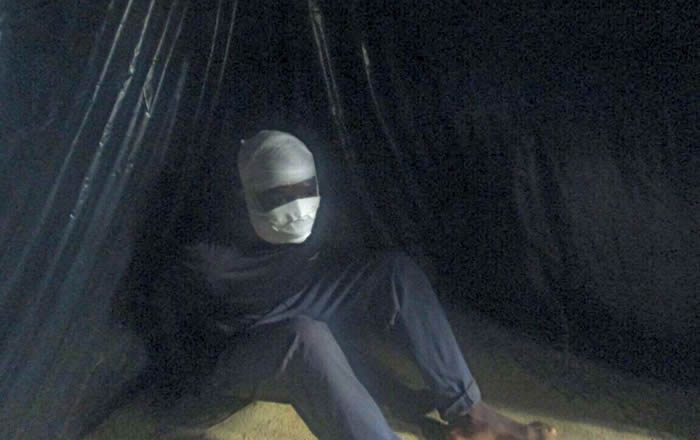
Dzamara had led a series of peaceful civil protests against President Robert Mugabe’s continued rule, which many, among them his erstwhile comrades during the liberation struggle that brought independence in 1980, insist has brought the country to its knees.
Different accounts have been proffered about Dzamara’s disappearance. Initially, it was reported that military operatives, whose national identity numbers were even splashed around, were responsible.
A naughty one claimed Dzamara had been found dead in Goromonzi, close to a Central Intelligence Organisation (CIO) torture farm where many Zanu PF critics are said have met their deaths over the decades.
The Goromonzi CIO base is in the same province as an equally notorious dam, Wenimbi, just after the farming town of Marondera.
Opposition Movement for Democratic Change (MDC-T) members have told harrowing stories of how their colleagues were grabbed from home during the night, tortured and thrown into Wenimbi Dam.
That was during the 2008 presidential run-off. Morgan Tsvangirai had handed President Robert Mugabe his first officially acclaimed defeat in an election since 1980.
It took slightly a month before the electoral commission announced the results of the first round of elections and when it did, Tsvangirai was leading by margin not big enough for him to form the next government, so a run-off was called.
Zanu PF launched a bloody campaign that it called “June 27: Win or War!”
It was a form of militarised scorched earth campaign in which suspected opposition supporters were rounded up, thrown into torture camps, maimed or killed and their homes burnt.
Many disappeared and their whereabouts are not known to date, in a sad narrative about Zanu PF’s history of violence, disappearances and assassinations.
A particularly harrowing story is that of Jane (not her real name even though she has come out in the public in the past), who was married to an MDC-T aspiring councilor from Epworth, a low-income suburb south-east of Harare.
One day in the morning, Jane says, two men driving a twin-cab came to her house in Epworth. The driver was in police uniform but his mate was in a suit.
They claimed they had discovered the body of her husband in notorious Goromonzi and invited her for identification of the corpse.
Naively, the woman who had missed her husband for two good months jumped into the car, and off they drove, with her in the front seat and plainclothes operative in the back.
She remembers the plainclothes grabbing her by the neck and jabbing her with what looked like a fluid filled syringe.
When she regained consciousness, she was at Parirenyatwa Hospital in Harare. Two weeks after, she discovered she was pregnant, and now has a baby girl who is seven years old.
Jane doesn’t know who the father of her girl is; nor does she know where her husband is, eight years on.
Jane’s husband is one of the hundreds of unsung victims of politically motivated violence in Zimbabwe because they are not famous.
The well-known ones are there too.
Cases of mysterious disappearances and suspected assassinations stretch back into the pre-independence period, when nationalist movements were locked in a bloody war with Ian Smith’s Rhodesian Front government.
One such case is that of Edson Furatidzayi Chisingaitwi Sithole, a prominent nationalist who, as a lawyer and freedom fighter, had shaken the racist Rhodesian regime.
He was arrested, tried and detained in jail in the early 1970s but later released, unfazed.
One night on 15 October 1975, he was at what is now known as the Ambassador Hotel in Harare and, when he bade farewell after meeting colleagues, he was never seen again, together with his young female secretary who was accompanying him.
Up to now, his whereabouts are not known, but prevailing theories say he was abducted by military intelligence and killed.
Needless to say, many freedom fighters also disappeared during the anti-colonial war and they may never be found.
Inevitably, critics have drawn angry parallels between Ian Smith and Robert Mugabe, the only ruler Zimbabwe has known since independence.
What Smith could do, Mugabe has been doing as well, this time on his black kith and kin.
The fact that the bodies of his critics and others have not been found does not matter to many; Mugabe and his cronies have already been tried in the public court.
Just after the attainment of independence, a civil war mostly confined to southern Zimbabwe broke out.
“Civil war” is somewhat an exaggeration if not completely false, because all what happened was Mugabe sent a specially trained army to that region and the soldiers started killing thousands of civilians and all in the name of looking for three or four self-professed dissidents.
During this clampdown that came to be known as Gukurahundi, many husbands, wives and children were rounded up, killed like chickens and their bodies thrown down wells and into dip tanks.
Surviving relatives of some of the victims are still looking for their own, yet many others have given up on the hope of ever knowing what happened.
These victims, like Jane’s husband, are unsung because they were not famous.
Some, like Dzamara, became famous after being assassinated or abducted.
In this category belongs Rashiwe Guzha who was mistress to a big man, Eddison Shirihuru, a former deputy director general for external affairs in CIO.
Somehow, so the story goes, their relationship went up the wrong road and Shirihuru took her to a hotel some time in 1990.
The CIO boss is said to have discovered that Guzha, who was working for the Treasury Computer Bureau, was having a side affair with a cabinet minister.
What happened when Guzha went into the hotel remains a puzzle up to date, but speculation has persisted that she was killed and thrown into a drum of acid.
The story bears resemblance to the newest claims on Dzamara’s disappearance. A new but unconfirmed report made this week says CIO operatives who took Dzamara shot him through the head and put him in acid. It remains difficult to confirm. Nehanda Radio