spot_img

RBZ slashes bank charges

Must Try

Trending

Nehanda Radio
Zimbabwe News and Internet Radio

By Tatenda Dewa | Harare Bureau |

The Reserve Bank of Zimbabwe (RBZ) has reduced charges on electronic transactions as part of its measures to promote non-banking hall services amid a biting cash crunch.
- Advertisement -
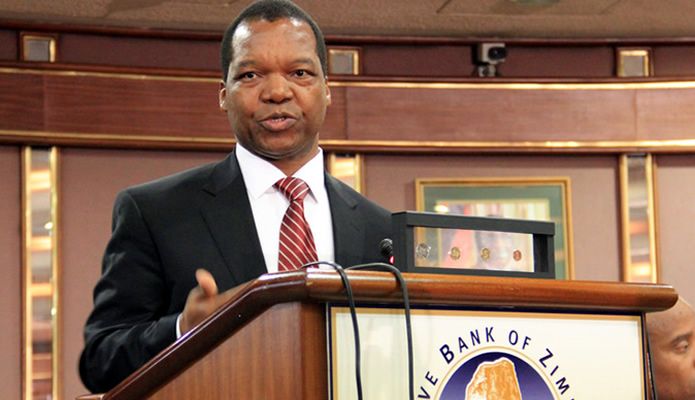
Reserve Bank of Zimbabwe governor John Mangudya

The central bank announced the development in a statement on Tuesday that the reductions were with immediate effect, after discussions with the Bankers Association of Zimbabwe (BAZ) and other financial services providers.

Government is striving to promote the use of plastic money to ease the current cash shortages that threaten to severely cripple industry and commerce.

“The Reserve Bank of Zimbabwe is pleased to advise the banking public that it has agreed with the Bankers Association of Zimbabwe and payment systems providers to reduce charges of electronic transactions in order to promote and encourage usage of electronic banking services,” said the central bank.

- Advertisement -

Steep bank charges were keeping depositors away.

For RTGS transactions, charges have fallen from $10 to a maximum of $5.

Automated teller machine transactions will however remain at $2.50 but electronic funds transfer will attract a minimum fee of 33 cents and a maximum of $2,10.

Point of Sale (POS) transactions of up to $10 are now attracting a charge of 10 cents, and transactions above $10 will be charged 45 cents from $2.50.

User charges on POS systems have been scrapped while merchant service commissions will incur charges ranging from nil to a maximum of 1 percent for local transactions and administration charges from zero to a maximum of $5 for individuals.

Since April, Zimbabwe has been experiencing an excruciating cash squeeze reminiscent of the hyper-inflationary period that reached a peak in 2008.

Banks are severely limiting cash withdrawals and depositors are being forced to sleep in queues, while business operations are now constrained due to the liquidity crunch.

The RBZ has invoked the law to monitor banking trends among major cash handlers as a way of ensuring that businesses deposit money into their accounts on a daily basis.

Poor export earnings, foreign currency externalisation and widespread circulation of money on the informal market have been cited as the major causes of cash shortages. Nehanda Radio


Related Articles

John Mushayavanhu, the new governor or the Reserve Bank of Zimbabwe, displays new banknotes of the country's currency to reporters, in Harare, April 5, 2024. (Columbus Mavhunga/VOA)

RBZ abandons 2030 multi-currency deadline, unveils new ZiG banknotes

0
HARARE - The Reserve Bank of Zimbabwe (RBZ) has abandoned its fixed 2030 deadline for ending the multi-currency system, shifting its focus instead to achieving key economic conditions, while also preparing to roll out new ZiG banknotes aimed at improving transaction efficiency and strengthening the local currency.
Steve Hanke, a Professor of Applied Economics at The Johns Hopkins University in Baltimore (Picture via Macroguy7979, CC BY-SA 4.0 , via Wikimedia Commons)

Zimbabwe’s ZiG ranked as one of the world’s worst-performing currencies

0
At a time when Zimbabwe is planning a phased transition to a mono-currency system, with the goal of making the Zimbabwe Gold (ZiG) its sole legal tender by 2030, the ZiG has been ranked as one of the world’s worst-performing currencies, according to United States economist Professor Steve Hanke, who placed it sixth on his latest Hanke’s Currency Watchlist.
John Mushayavanhu, the new governor or the Reserve Bank of Zimbabwe, displays new banknotes of the country's currency to reporters, in Harare, April 5, 2024. (Columbus Mavhunga/VOA)

Zimbabweans are not embracing the ZiG, Mr. Mushayavanhu — they’re simply disposing of it!

10
It’s astonishing how easy it is to convince oneself to see what simply isn’t there. The Reserve Bank of Zimbabwe (RBZ) wants us to believe that the growing number of transactions conducted in the Zimbabwe Gold (ZiG) is a sign of renewed public confidence in the local currency. But let us not be deceived. The truth is far less flattering.
Reserve Bank of Zimbabwe (RBZ) governor John announcing the introduction of the new gold-backed currency known as ZiG (Picture via Ministry of Information)

Zimbabwe “imposes” backdoor price controls amid currency confusion

1
HARARE - The Reserve Bank of Zimbabwe (RBZ) is facing criticism from economists and market analysts who accuse it of implementing de facto price controls through its recent directives on exchange rate determination.
John Mushayavanhu, the new governor or the Reserve Bank of Zimbabwe, displays new banknotes of the country's currency to reporters, in Harare, April 5, 2024. (Columbus Mavhunga/VOA)

Zimbabwe’s foreign currency receipts soar 21% to US$13.3 billion in 2024

9
HARARE - Zimbabwe's foreign currency receipts reached a record high of US$13.3 billion in 2024, marking a 21% increase from the previous year, according to the 2025 Monetary Policy Statement released by Reserve Bank of Zimbabwe (RBZ) Governor, John Mushayavanhu.

Don't miss a story

Breaking News straight to your inbox.

No spam just news !

0 0 votes
Article Rating
Subscribe
Notify of
0 Comments
Oldest
Newest Most Voted
Inline Feedbacks
View all comments
- Advertisement -spot_img

Latest Recipes

Latest

More Recipes Like This