By Cyril Zenda
After the Judicial Services Commission (JSC) initiated the process of removing the country’s Prosecutor General (PG), Johannes Tomana, from office on grounds of being unfit to continue holding the position in the aftermath of his conviction by the Constitutional Court (ConCourt) late last year on contempt of court charges, if there is anything that the embattled lawyer is having in dangerously short supply, it is public sympathy.
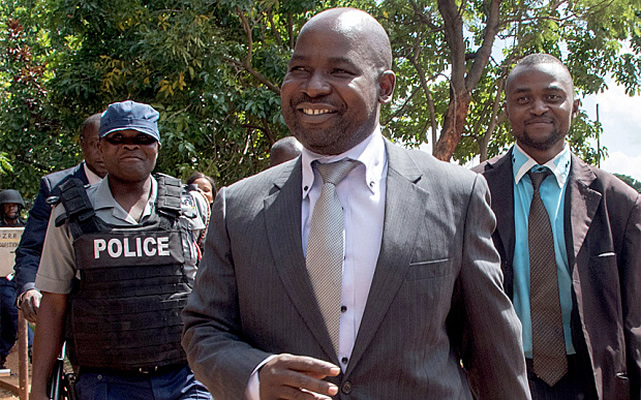
While the country’s chief law officer is adamant that he should not be subject of a probe into his fitness to remain in the esteemed office, legal minds say it is only a question of time before Tomana is job-hunting.
Despite his vehement protestations against the move by the JSC, lawyers said the fact that he did not volunteer to resign in the aftermath of his conviction of very serious charges of violating the supreme law of the land that he undertook to protect in his oath of office, the legal process to remove him from office was long overdue.
On February 12, JSC chairman, Chief Justice Godfrey Chidyausiku, wrote to Tomana asking him to show cause why disciplinary proceedings against him should not be instituted in the face of his conviction in cases that constitute serious violation of the country’s Constitution.
“It is the view of the Judicial Service Commission that they both speak to your suitability to continue to hold the office of Prosecutor-General,” reads Justice Chidyausiku’s letter to Tomana.
“On the basis of these judgments, the JSC is of the view that a prima facie case exists for it to act in terms of Section 259(7), as read with Section 187, of the Constitution of Zimbabwe, subject to any submissions you may wish to make in this regard,” Chidyausiku wrote.
In October last year, the ConCourt convicted Tomana of wilful defiance of court orders in cases in which the High Court and the Supreme Court had ordered him to issue certificates for private prosecution in two cases involving Bikita West legislator, Munyaradzi Kereke and Telecel shareholder, Jane Mutasa that his office had refused to prosecute.
He was sentenced to a 30-day prison sentence, which was suspended on condition that he complied with the outstanding court orders. It was after his conviction and a pending jail term that Tomana — who stridently argued that such orders interfered with the constitutional independence of his office — only complied.
After his conviction, there were calls for the PG to resign, which calls Tomana pointedly ignored. At the time, legal expert, Alex Magaisa pointed out that the fact that Tomana had been convicted by the ConCourt of gross misconduct automatically disqualified him from the PG’s position.
“Is a man who has been found to be in contempt of court and to have violated the Constitution by the highest court in the land still a fit and proper person to hold the important office of the PG? As the PG, Tomana has a constitutional duty under Section 261, to uphold the Constitution and the law of the land. The ConCourt has found him to be in breach of the Constitution and to be in contempt of court, both of which constitute a contravention of the PG’s duty under Section 261 of the Constitution,” Magaisa pointed out.
“Further, in grounding its decision on the basis of its role under Section 165(1)(c), in regard to ‘safeguarding…the rule of law’, the ConCourt was making the statement that the PG’s conduct had violated and undermined the rule of law. Therefore, a question arises whether a person who wilfully undermines the rule of law is a fit and proper person to hold such a high office.
“It is arguable, on these grounds that the PG falls short of the standards required of a person occupying that office. Can the public have confidence in a person who is prepared to and has been found by the highest court in the land to be in violation of the Constitution and the rule of law?
“Does he still have the moral authority to prosecute other persons for violating the law of the land when he himself has been found guilty of violating the highest law of the land? It is hard to find an answer to these questions in the affirmative. The PG has been found to have wilfully disobeyed the Constitution and court orders or at the very least to have been reckless as to the consequences of his conduct. How does he call upon others to be law-abiding citizens when he himself has failed and/or refused to do the same?”
The latest move by the JSC appears to confirm Magaisa’s misgivings.
Instead of responding to charges of his wilful disregard of court orders, Tomana instead responded to the JSC’s move by filing an urgent chamber application in the High Court seeking to stay the process, challenging his conviction by the ConCourt.
He argued that the process seeking to remove him from office was unlawful.
In the application, in which he cited the JSC and Justice, Legal and Parliamentary Affairs Minister, Emmerson Mnangagwa, as respondents, Tomana challenges the validity of the process.
“I seek a declaratory order bearing on the invalidity of the process which has been commenced by the first respondent (JSC) purportedly in terms of section 187 of the Constitution of Zimbabwe,” Tomana said in an 11-page affidavit.
“Pending determination of this matter, I seek in the interim a temporary interdict stopping the commencement of the process.”
Tomana argues that the ConCourt judgment that committed him to jail unless he issued certificates for private prosecution was issued from a court of no jurisdiction.
“The orders I was held to have been in contempt of are orders of the High and Supreme Courts respectively,” said Tomana.
“Compliance with those orders is enforced by the High Court. In fact, as at the date of the order of the Constitutional Court, proceedings for contempt had been instituted in the High Court. The Constitutional Court has no jurisdiction to relate to a matter which was within the purview of the High Court.” Financial Gazette
Discover more from Nehanda Radio
Subscribe to get the latest posts sent to your email.