spot_img

Zimbabwe to establish bond market

Must Try

Trending

Nehanda Radio
Zimbabwe News and Internet Radio

By John Kachembere

HARARE – Reserve Bank of Zimbabwe (RBZ) governor John Mangudya says the country is ready to establish a bond market.
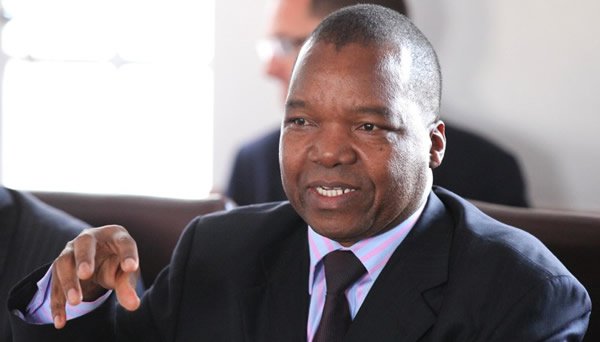
John Mangudya
John Mangudya

“The bond market would be an avenue for the intermediation process through the mobilisation of long-term savings and channelling them to the needy productive sectors of the economy,” he said in his mid-term monetary policy statement on Wednesday.

Mangudya noted that a vibrant and liquid bond market will also facilitate the development and deepening of the domestic financial system.

“Liquidity is critical in the secondary bond market to allow investors to move in and out of their positions without challenges. Once affordable funding has been availed to the productive sectors of the economy, the Reserve Bank expects improvement in capacity utilisation and an increase in exports — a major source of the much needed liquidity,” he added.

This comes as the Zimbabwe Stock Exchange last year indicated that it was working on establishing a bond market in the country.

A bond market involves the issuance and trading of debt securities in a financial market where participants can issue new debt, known as the primary market, or buy and sell debt securities as the secondary market.

This is usually in the form of bonds but it may include notes and bills with the primary goal to provide a mechanism for long-term funding of public and private expenditures.

In mature markets the bond market plays a critical role in the mobilisation of long-term financing for government, quasi-government and the private sector needs.

Market experts say in the wake of serious liquidity constraints facing the productive sectors of the economy due to the short-term nature of bank loans, the bond market can play a significant role in availing long-term for development of the economy.

“Due to high levels of nonperforming loans, banks have increasingly reduced their lending to the productive sectors with most of them focusing on individual salary-based consumptive lending. It is against this background that the bond market has a major role to play to fill the financing gap,” said Mangudya.

The major participants in the bond market include local institutional investors such as pension funds and insurance companies, and foreign investors.

The productive sectors of the economy require long-term funding to replace antiquated and obsolete machinery and employ modern cost-effective production techniques that enhance production and product competitiveness. Daily News

Related Articles

John Mushayavanhu, the new governor or the Reserve Bank of Zimbabwe, displays new banknotes of the country's currency to reporters, in Harare, April 5, 2024. (Columbus Mavhunga/VOA)

RBZ abandons 2030 multi-currency deadline, unveils new ZiG banknotes

0
HARARE - The Reserve Bank of Zimbabwe (RBZ) has abandoned its fixed 2030 deadline for ending the multi-currency system, shifting its focus instead to achieving key economic conditions, while also preparing to roll out new ZiG banknotes aimed at improving transaction efficiency and strengthening the local currency.
The Air Zimbabwe Flight UM145 from Harare to Mutare (Picture via X - @FlyAirZimbabwe)

Air Zimbabwe targets June 2026 return of direct Harare to London flights

0
HARARE - Air Zimbabwe is set to resume direct flights between Harare and London by June 2026, following a restructuring programme led by the Mutapa Investment Fund, which includes leasing a long-haul aircraft to service the route.
Steve Hanke, a Professor of Applied Economics at The Johns Hopkins University in Baltimore (Picture via Macroguy7979, CC BY-SA 4.0 , via Wikimedia Commons)

Zimbabwe’s ZiG ranked as one of the world’s worst-performing currencies

0
At a time when Zimbabwe is planning a phased transition to a mono-currency system, with the goal of making the Zimbabwe Gold (ZiG) its sole legal tender by 2030, the ZiG has been ranked as one of the world’s worst-performing currencies, according to United States economist Professor Steve Hanke, who placed it sixth on his latest Hanke’s Currency Watchlist.
John Mushayavanhu, the new governor or the Reserve Bank of Zimbabwe, displays new banknotes of the country's currency to reporters, in Harare, April 5, 2024. (Columbus Mavhunga/VOA)

Zimbabweans are not embracing the ZiG, Mr. Mushayavanhu — they’re simply disposing of it!

10
It’s astonishing how easy it is to convince oneself to see what simply isn’t there. The Reserve Bank of Zimbabwe (RBZ) wants us to believe that the growing number of transactions conducted in the Zimbabwe Gold (ZiG) is a sign of renewed public confidence in the local currency. But let us not be deceived. The truth is far less flattering.
Reserve Bank of Zimbabwe (RBZ) governor John announcing the introduction of the new gold-backed currency known as ZiG (Picture via Ministry of Information)

Zimbabwe “imposes” backdoor price controls amid currency confusion

1
HARARE - The Reserve Bank of Zimbabwe (RBZ) is facing criticism from economists and market analysts who accuse it of implementing de facto price controls through its recent directives on exchange rate determination.

Don't miss a story

Breaking News straight to your inbox.

No spam just news !

0 0 votes
Article Rating
Subscribe
Notify of
0 Comments
Oldest
Newest Most Voted
Inline Feedbacks
View all comments
- Advertisement -spot_img

Latest Recipes

Latest

More Recipes Like This