



Olinda, Stunner, Dyonne saga: When celebrity drama turns into a national mirror

On the evening of December 17, 2025, Zimbabwe did what it has become remarkably good at doing. It paused. Not for a power cut or a breaking policy announcement, but for a family dispute playing out in real time on social media.
Phones lit up across Harare and beyond. Voice notes circulated. Screenshots multiplied. A private home, a frightened child, and allegations involving state security blurred into a spectacle that felt too intimate to ignore and too disturbing to dismiss.
This was not entertainment in the traditional sense. It was something closer to collective voyeurism, a national audience leaning in as the long-running saga involving Olinda Chapel, Desmond “Stunner” Chideme and Dyonne Tafirenyika took yet another turn.

The details were messy and contested. Allegations flew faster than verification could keep up. Yet the country watched, argued, chose sides and, in doing so, revealed something deeper about itself.
At its core, this episode raises a simple but uncomfortable question. Why does a celebrity custody dispute command so much of our emotional energy in a nation facing far weightier crises?

The immediate drama was incendiary. According to Olinda’s account, her home was forcibly entered by Dyonne, allegedly accompanied by operatives linked to the feared Central Intelligence Organisation, in a bid to retrieve Owami, the child she shares with Stunner.
What followed, she claimed, was a chaotic confrontation involving physical altercations and the traumatic removal of a child.
Audio recordings and fragments of video ricocheted across WhatsApp groups and Instagram feeds, each clip treated as definitive proof by whichever side shared it.
To be clear, much of this remains allegation. No court has adjudicated these claims. No official statement has confirmed the involvement of state agents. Scepticism is not only warranted, it is essential.
Zimbabwe’s social media ecosystem has perfected the art of half-truth, where emotionally charged narratives harden into accepted fact long before evidence is tested. And yet, to wave this away as mere gossip misses the point entirely.
What unsettled the public was not only the celebrity angle, but the suggestion that private disputes can be escalated through power and proximity. Even the rumour of state security being deployed in a domestic conflict taps into a deep national nerve.
In a country shaped by memories of political violence and state overreach, whispers carry weight. They summon history, whether fair or not.

This is where the story transcends tabloid fodder. The Olinda-Stunner-Dyonne triangle has endured for nearly a decade, not because Zimbabweans lack better things to discuss, but because it has evolved into a public parable.
Once, it was about infidelity and heartbreak, broadcast infamously through Facebook Live. Later, it became about co-parenting, court appearances and competing claims to moral high ground. Now, it hovers uncomfortably at the intersection of celebrity, motherhood and political anxiety.
Stunner, the talented but erratic rapper, occupies a familiar cultural role. He is the gifted man undone by his own contradictions. Olinda, once publicly humiliated, has recast herself as resilient and composed, a woman who survived public betrayal and rebuilt abroad.
Dyonne, often reduced online to caricature, insists on being seen not as a footnote in someone else’s marriage, but as a mother fighting for her child. None of these identities are static. They shift with each live stream, each leak, each emotional confession.
And that fluidity is precisely why audiences remain invested. These are not distant Hollywood figures buffered by publicists and lawyers. They feel close. Relatable. Like extended family whose arguments spill over at weddings and funerals.
In a society where economic pressure has stripped many of privacy and dignity, watching the powerful unravel offers a strange sense of parity, a sense of schadenfreude.

But there is a darker undercurrent here, one that deserves scrutiny rather than indulgence.

The speculation surrounding political connections, particularly claims that Dyonne’s family ties extend into the first family, speaks less to confirmed nepotism than to a widespread belief that power in Zimbabwe is personal before it is institutional.
Whether or not these links influenced events is almost beside the point. What matters is that millions found the idea plausible. That alone should trouble us.
Critics will argue that invoking politics in a celebrity dispute is reckless, even irresponsible. They are not wrong. Zimbabwe has a long history of paranoia feeding misinformation. But dismissing public concern as hysteria ignores why such fears take root.
In societies with strong, trusted institutions, rumours struggle to survive. In societies where justice often appears selective, they flourish.
Social media, of course, poured petrol on every spark. Platforms designed to reward immediacy and outrage transformed fragments into full-blown narratives. Silence was interpreted as guilt. Deletions became confessions.
Each faction performed its outrage with performative certainty. Bloggers, chasing relevance, blurred commentary with conjecture. What might once have been a contained legal dispute became a national referendum on morality, motherhood and power.
There is an argument, often made, that this transparency is healthy. That airing such conflicts publicly holds the powerful accountable.
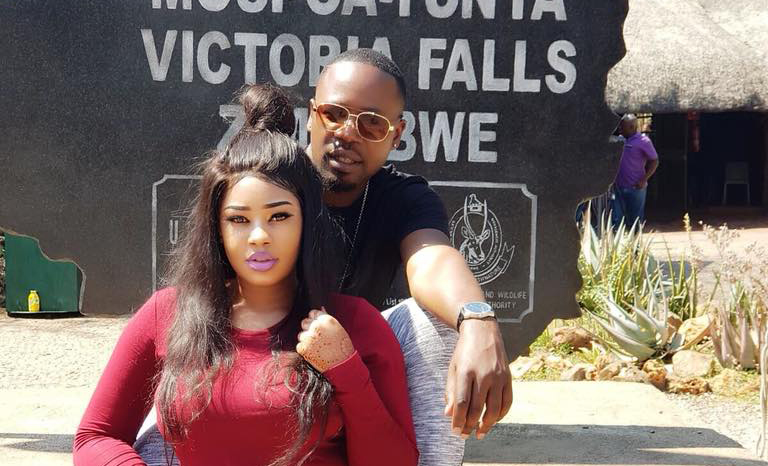
In theory, perhaps. In practice, the algorithms do not reward accountability. They reward spectacle. Pain becomes content. Trauma becomes currency.
Lost in all this noise is the one person with no voice at all. Owami. A child whose name trends before her consent, whose future will include digital footprints of moments she did not choose.
Psychologists have long warned about the effects of public parental conflict. Add celebrity and social media and the risks multiply. We tell ourselves that children are resilient. Often they are. But resilience is not immunity.
So why does Zimbabwe keep watching? Part of the answer lies in fatigue. When daily life is shaped by inflation, unreliable services and political uncertainty, drama offers both distraction and connection.
It gives people something shared, something immediate, something that feels consequential without demanding policy literacy. It also reflects a cultural shift, from private resolution to public performance, where validation is sought not from elders or courts, but from timelines.
Yet there is also a mirror effect at play. These stories resonate because they echo our own unresolved tensions. Broken relationships. Co-parenting conflicts. Power imbalances. The temptation to win rather than to heal.
In that sense, the spectacle is not an escape from reality, but an exaggerated version of it.
Eventually, the feeds will move on. Another scandal will rise. Another outrage will trend. But the underlying questions will remain. How much of our collective attention should we surrender to the pain of others?
At what point does commentary become complicity? And who pays the price when private suffering is nationalised?
If there is a lesson here, it is not about choosing sides. It is about restraint. About remembering that behind every viral moment are people who do not log off when the audience does.
Zimbabwe deserves better stories, yes. But more importantly, it deserves a culture that knows when to look away.
Because not everything that can be watched should be.
Gabriel Manyati is a Zimbabwean journalist and analyst delivering incisive commentary on politics, human interest stories, and current affairs.

