



The Dangers of Comfortable Lies: Why Mbofana misreads Mandela and misrepresents Mugabe

Tendai Ruben Mbofana’s defence of Nelson Mandela on Nehanda Radio reads like an attempt to enshroud the past in bubble wrap.
His argument is not merely selective. It is an exercise in historical sanitisation, designed to shield Mandela from genuine scrutiny while turning Robert Mugabe into an easy moral punchbag.
In his deeply flawed response to my op-ed, he insists critics who describe Mandela as a sell-out are misinformed.

Yet the real problem is not public ignorance. It is a refusal to confront the uncomfortable truth that the miracle of 1994 came with a heavy price, one that black South Africans continue to pay.

Mbofana claims all liberation movements settled for compromise, which is true enough. But this point becomes a convenient shield, allowing him to dodge the deeper question.
Why did Mandela accept constitutional arrangements that froze settler property rights in place and entrenched racial inequality for decades?
Decades into majority rule, white South Africans still command most of the country’s prime farmland, while millions of black citizens remain locked in poverty.
Reconciliation may have prevented civil war, but it also allowed the architects of apartheid to walk away with their fortunes intact.
To pretend this was a triumph of moral clarity is to insult the lived experiences of those who feel that the struggle’s promises were quietly abandoned in polished boardrooms.
Mbofana’s treatment of Zimbabwe is even more troubling. He suggests Mugabe happily embraced the willing-seller willing-buyer scheme and later manufactured land reform purely for political survival. This is historically clueless.
Any knowledgeable history student would be aware that Mugabe loathed the ten-year moratorium imposed at Lancaster House. He saw it as a constitutional handcuff designed to protect settler privilege under the guise of legality.
He accepted it only because rejecting the settlement would have prolonged the war and because regional allies demanded compromise.
Mozambican president Samora Machel, weary of Rhodesian military incursions on Mozambican soil, especially told Mugabe to accept the agreement as it was.
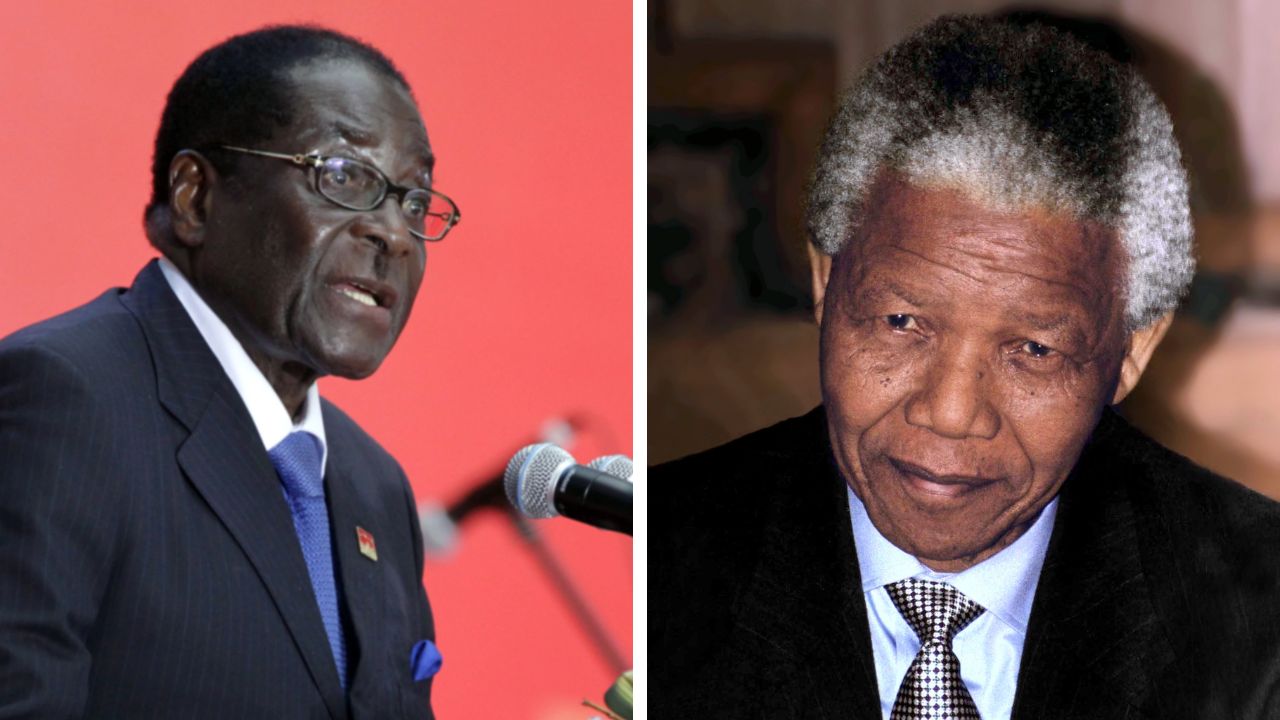

Even then Mugabe believed the clause was temporary and expected the land question to return with full force once Zimbabwe stabilised.
To pretend Mugabe was enthusiastic about this arrangement is not simply wrong. It is a manifestation of ignorance expressed through mindless regurgitation of what Mbofana has heard others saying, without knowing the full story himself.
Mbofana’s sweeping dismissal of fast-track land reform as elite looting is equally simplistic. Yes, the process was chaotic and often brutal. Yes, economic collapse followed. But it also redistributed land to hundreds of thousands of black families.
It shattered the sanctity of colonial era property structures that South Africa’s negotiated transition never touched.
To erase this reality is to debate history in bad faith. It is to judge Zimbabwe by its worst excesses while praising South Africa for its most polished illusions.
What Mbofana ultimately promotes is a dangerous moral relativism. By using Mugabe’s failings as a cushion to soften Mandela’s compromises, he encourages a shallow comparison that excuses both leaders rather than evaluating them on their own terms.
Mandela’s settlement avoided immediate bloodshed, but it also created the perfect incubator for later corruption and elite capture.
Mugabe’s radicalism confronted colonial injustice but in a manner that unleashed devastation. Neither path was perfect, but each deserves serious interrogation rather than one-dimensional caricature.
Mbofana’s version of history is comfortable. It flatters South Africa’s self-image and vilifies Zimbabwe’s legacy without wrestling with complexity. But liberation was never meant to be comfortable. It was meant to be transformative.
If we continue to protect Mandela’s record from criticism and reduce Mugabe’s to cheap moralism, we will never understand why injustice persists so stubbornly across the region.
True historical honesty demands that we break free from these comforting narratives. Mandela preserved peace but froze inequality. Mugabe pursued justice but destroyed stability.
South Africa remains one of the most unequal societies on earth, with levels of wealth concentration that consistently rank at or near the very top globally.
While inequality is a widespread feature of capitalist economies, South Africa’s divides are unusually severe, fuelled by a legacy of racial dispossession that still structures who owns land, capital and productive assets.
Studies repeatedly show that a tiny minority, still overwhelmingly white, controls the vast majority of national wealth, while millions of black South Africans remain trapped in poverty despite three decades of democracy.
The country’s Gini coefficient is among the highest in the world, surpassing most emerging economies and rivalling the extreme disparities seen in a handful of Latin American states before recent reforms.
What makes South Africa’s inequality particularly stark is not only its magnitude but its stubborn persistence, as post-apartheid policies have struggled to dismantle entrenched advantage or deliver broad-based economic mobility.
Africa’s struggle for genuine liberation lies in confronting these truths without apology. Anything less is simply another form of betrayal.
Gabriel Manyati is a Zimbabwean journalist and analyst delivering incisive commentary on politics, human interest stories, and current affairs.

