Biggie Tembo Junior, the son of the Bhundu Boys lead singer and rhythm guitarist who died in 1995, led the singing at the funeral of Bhundu Boys founder Rise Kagona in Mufakose, Harare on Saturday.
Kagona, who died in Scotland, was finally buried in Zimbabwe over a month after his sudden death.
The funeral was held at Kagona’s parents house in Mufakose.
Biggie Tembo Jnr looks just like his father, except for his bald head where his father had a well-groomed afro. He joined his mother, Ratidzai, and Kagona’s children and relatives in singing hits like “Simbimbino” and “Hatisi Tose.”

Tembo said: “As I reflect on the life and legacy of Mr Rise Kagona, co-founder of the Bhundu Boys, I’m filled with gratitude and sadness. Gratitude for the music that brought us together, and sadness for the loss of a true legend.”
“Attending Mr Rise Kagona’s funeral with my Mommy (on the mic) was a touching reminder of the impact his music had on our lives.
“As the family of the late Biggie Tembo, we’re deeply saddened by Mr Rise Kagona’s passing, but we celebrate his life, legacy, and the indelible mark he left on our music industry.
“From ‘Hamba Kahle’ to ‘Tsvimbodzemoto’ to ‘Kuroja Chete’ to ‘Simbimbino’ the Bhundu Boys’ classics continue to evoke emotions, spark memories, and inspire new generations.”
“I honored Mr Rise Kagona by playing Bhundu Boys music, and celebrating his legacy. Rest in peace, Mr Rise Kagona. Your music will forever be a part of us.”

Tembo junior introduced me to his mum. While I was chatting with Mrs Ratidzai Tembo, Clever Kagona, the late Rise’s son, interrupted our chat. They shared a warm and genuine hug which indicated they have known and respected each other for years.
Guitarist, producer and author, Clive Mono Mukundu also joined Biggie Tembo junior in singing on the eve of the burial with vocalist Derrick Mpofu whose higher voice registers are closer to the legend Biggie Tembo singing “Hatisi Tose.”
Mpofu and Mukundu make time to attend funerals of deceased or visiting ailing colleagues and playing music at their funerals. The Kagona family was especially touched by Mukundu’s gesture.
Mukundu played lead guitar for Mtukudzi for many years and flattered Kagona while playing the opening lines of “Hatisi Tose.” This final memory of an eccentric and reclusive but loving legend will never be forgotten by the family.
Mukundu said: “I attended as a fellow musician and guitarist. Given his contributions to the music industry, I expected a large number of musicians to attend, whether or not they knew him personally.”
“As a musician, his legacy is his contribution to the country, because his band paved the way for all other musicians who later became international.”
Kagona left his mark on the world stage as a musician who advanced Zimbabwean mbira guitar.
His Scottish protégé, Ben Avison, explained how Kagona would play “Wafungeyiko” lead guitar which was written by Safirio Madzikatire, the late, great and storied musician and actor who inspired the whole 1970s and 80s generation of musicians also known as Mukadota.
From Avison’s explanation, Kagona kept it simple on this ballad. It was one of the songs Kagona liked. He was known for playing only his own compositions (from before and after Bhundu Boys) since the band finally folded.
Kagona’s song “Upenyu Hwangu” is translated “My life” referring to the day of his death. Born of Seventh Day Adventist parents in Malawi, the family moved to Zimbabwe while he was an infant. He grew up in Mufakose and by observation and invention taught himself how to play guitar.
Kagona’s guitar could infuse the simpler open chords with scales. One person who mastered this trick was Oliver Mtukudzi who went international after Bhundu boys folded.
By contrast, Biggie Tembo played the more complicated Barre chords and provided rhythm guitar lines. In “Wafungeyiko” Avison explained to me that Shakespear Kangwena’s keyboards provided another crucial layer to the song.
David Mankaba became something of a legend on bass guitar with musical enthusiasts as he sang along, danced along and played along with Tembo. If this wild combination was not enough to provide a layer of a moving wall of sound, then there was Kenny Chitsvatsva on drums.
Musicians in Zimbabwe have become more knowledgeable on instruments and other elements of music. But the common sense and combination and consistency that binded these 5 men may never be replicated. Not that people are not offering something different.
Kagona played his role in sharing this knowledge with his Jit Jive band and its members in Scotland.
At his funeral Avison delivered a masterful performance of “Wafungeyiko” which had Kenny Chitsvatsva and Washington Kavhayi (both former Bhundu boys) emotionally thanking Avison. Avison sang in shona.
Kagona grew up in Mukonde street in Mufakose. Film producer and actor Marian Kunonga who was in the same class as Kagona’s brother in her early grades said: “I went to Mutionokura Primary School in 1981.One of my classmates was George Kagona (Rise’s brother).
“He had ageism and looked older than his age. We would hold hands leaving class as the shortest in class. Rise would come and pick his younger brother George.”
“In those early 80s they played music in Muvangwa. Then Bhundu boys became one of my best bands. I was a DJ in South Africa and I would play their music on radio. Their music raised me. It’s a big loss and we will remember them through their music.
“Rise was already in Form 4 when I was in Grade 1. His success surprised me. He was just like a protective big brother and I felt safe around him.”
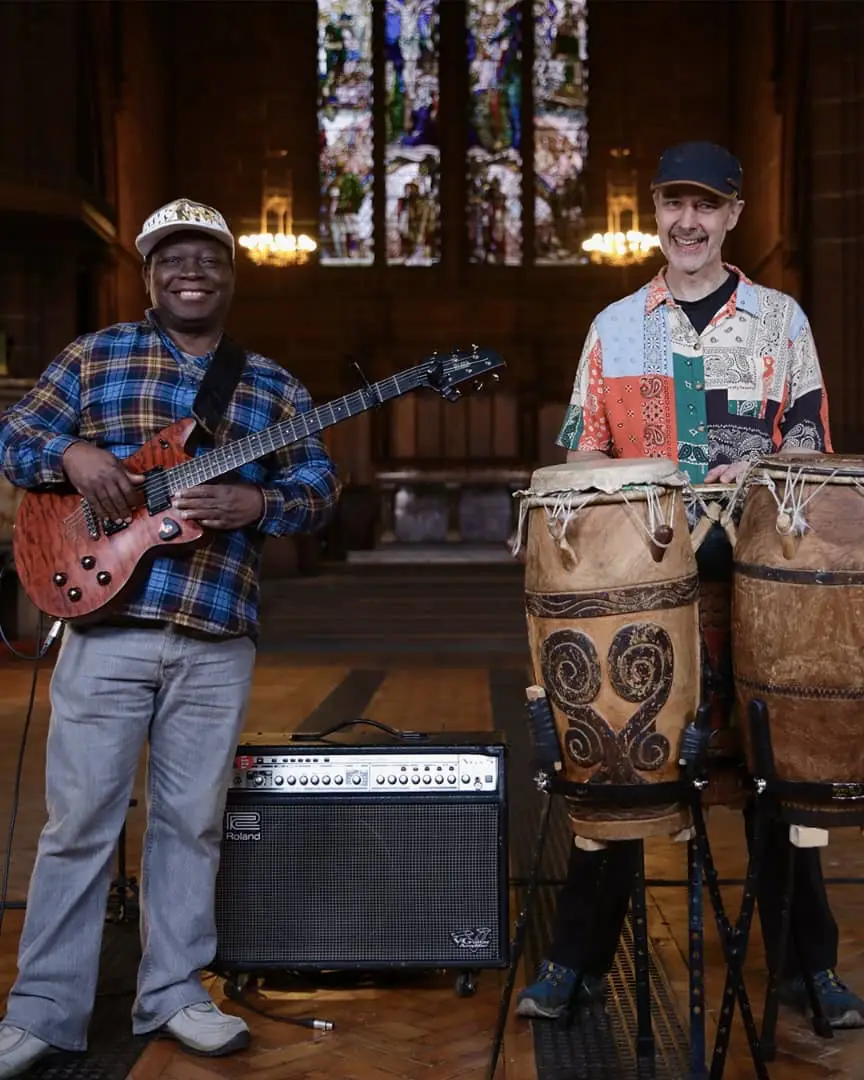
Andy Cooke, the mild mannered percussionist in Rise Kagona and Jit Jive band explained: “Kenny, Washington and Kuda (Matimba) drove through the night to attend the memorial service. At the end of the service, they helped lift the coffin onto the hearse, which then drove away.
“Afterwards, at the church hall, I met them (some of them for the first time), and they all expressed gratitude to me for arranging the repatriation. They didn’t hang around after the event – they left straight away for another 6-8 hour drive home!”
“At the reception in the hall, the tributes to Rise continued right until the end – with friends giving speeches, and others singing songs. This ended with the Bhundus – Kuda firstly sang a beautiful mbira song for Rise. Then Washington and Kenny joined.
They invited a choir of women from Zimbabwe to join them, and together they sang some funeral songs for Rise. It felt like a historic moment seeing the three former band-mates of Rise sing together.”
“It’s actually a relief that Rise has made it home finally – I took a risk when I promised the family that we’d get him home, but I was overwhelmed by how well the GoFundMe fund went.
The arrangements were very tricky to organise, and Desire and Clever played a big role in securing the permission for Rise to return.”
Cooke had to be content watching streamed video of events in Zimbabwe. He said: “Although I was travelling back from a gig in England at the time, I tried to follow the events in Zimbabwe.
“I really enjoyed seeing people sing and dance for Rise through the night and at the service. The burial itself was very moving to watch, and felt a little like closure for me.”
Kagona was defined as an “Alien” on his ID in Zimbabwe and travelled on a Malawian passport to UK in 2002 when he finally left Zimbabwe. It provided some challenges on his repatriation.
Cooke said: “Desire kind of saved the day, by securing the paperwork that allowed RIse (a Malawian) to return home to Zimbabwe. I called him to thank him personally!”
Desire Muloyiwa (36) the funeral Director said: “Claremont Funeral Services repatriate bodies daily. We work with The Ministry of Health, Registrar General’s Office and The Foreign Affairs Ministry.”
“We repatriated the legend, Rise Kagona, from Scotland. I was overwhelmed. He travelled on a Malawian passport which created a logistical nightmare. I ran around until the authorities confirmed his burial in Zimbabwe.”
Kagona was buried at the legends section of the closed Warren Hills cemetery where he was accorded Legend status.
Kagona was buried next to Zex Manatsa, the musician who tipped the Bhundu Boys to secure the Saratoga performance contract he was vacating considered the modern father of Zimbabwean music.
Also buried at the same place is George “Mastermind” Shaya who was Zimbabwe’s best local player with Dynamos winning Soccer star of the year 5 times. Mukadota who composed “Wafungeyiko” had a stage wife, Susan Chenjerai or Mai Rwizi who is also buried near Kagona.
Muloyiwa said: “We would like to have branches all over the world to ensure clients are covered through reasonable premiums and affordable prices for repatriation.”
Organiser Andy Cooke concluded: “Just a big thank you to all the kind people over here who donated their money to help Rise get home to his family and to lie at rest among other legends of Zimbabwe.”
Discover more from Nehanda Radio
Subscribe to get the latest posts sent to your email.