Government is mulling a merger between the National Infrastructure Company of Zimbabwe (NOIC) and Petrotrade, which could result in the resuscitation of the National Oil Company of Zimbabwe (NOCZIM), unbundled seven years ago to create the two entities.
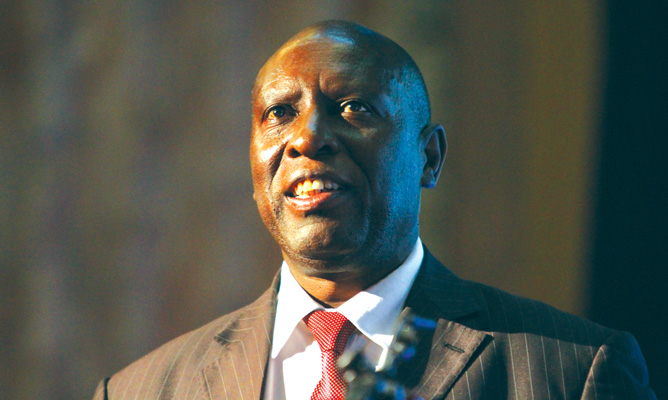
The planned merger was revealed by Energy and Power Development Minister, Samuel Undenge, on Wednesday last week when he was asked by Binga North Member of Parliament, Prince Sibanda, why his ministry had created a new fuel retail firm, Genesis, when government already owned Petrotrade.
He told Parliament that discussions on the planned merger were already underway, highlighting that government intended “to achieve the advantages of economies of scale” by merging the two businesses.
NOIC provides bulk transportation, storage and handling of petroleum products to meet the country’s fuel requirements while Petrotrade is a trading company responsible for downstream activities, including the selling of petroleum products and lubricants through bulk sales and service stations.
NOIC has storage facilities with a capacity to carry over 500 million litres at its depots across the country. The company has five depots in Mutare, Bulawayo and Beitbridge, Msasa and Mabvuku. It transports petroleum products by pipeline from the port of Beira in Mozambique into Zimbabwe on behalf of its customers.
Oil from Beira is pumped through a 408-kilometre pipeline, which was built in 1966. It passes through the Feruka Oil Refinery in Mutare to Harare.
Its major customers are oil importers who get products from Beira for use in Zimbabwe and in the southern African region.
Zimbabwe imports about 2,5 million litres of diesel and 1,5 million litres of petrol daily. The fuel sector is the biggest consumer of foreign currency in the country.
The company is strategically positioned to provide logistic services for effective re-export of fuel into regional markets such as Zambia, Botswana and the Democratic Republic of Congo.
Apart from this, the company also undertakes blending services on behalf of its clients after government directed petroleum players to blend all petrol.
NOIC has been operating profitably, consistently declaring dividends to its shareholder since 2013.
Last year, NOIC declared a US$4 million dividend to government for the 12 months to December 31 2015. This came as a result of a 37 percent increase in profits.
Petrotrade also declared a dividend last year to government amounting to US$225 000 after posting a US$1,8 million net profit for the year to December 2015.
Petrotrade has been without a board for two years, another issue that concerned legislators.
In order to know more about the planned merger, Parliament has asked Undenge to prepare a ministerial statement answering questions around the amalgamation, which most legislators consider to be surprising considering that both Petrotrade and NOIC have been making profits since their unbundling from NOCZIM.
The unbundling process was overseen by former Movement for Democratic Change deputy treasurer, Elton Mangoma, who was then minister of energy during the inclusive government.
A similar plan to unbundle the country’s power utility, ZESA Holdings, was scuttled by former energy minister, Dzikamai Mavhaire, following the collapse of the inclusive government in 2013 after ZANU-PF romped to a landslide victory to form the current government.
Mavhaire, who was sacked from both government and the ruling party following a purge of former vice president Joice Mujuru and her allies, alleged that the plan to unbundle ZESA was part of a scheme to destroy the parastatal, which however was beleaguered by allegations of political interference and abuse of funds to support ZANU-PF projects during his tenure.
The then clerk of Parliament, Austin Zvoma, had been forced to hurriedly write to the Registrar of the High Court and the chief secretary to the President and Cabinet demanding the return of the Electricity Amendment Act 2013 which sought to unbundle ZESA into what was described as “an indeterminate number of privately-owned successor companies”.
Mangoma was said to be plotting to “effectively put the critical power sector into the hands of unknown Western investors” through the unbundling exercise.
It was not immediately clear if government’s plan to resuscitate NOCZIM was being informed by the same thinking that resulted in the abortion of ZESA’s unbundling.
NOCZIM, a corruption-ridden parastatal that was blighted by massive looting and mismanagement, faced many problems since 2002 when government de-regularised the procurement of petroleum products in a move that saw private players coming on board.
The parastatal then embarked on a programme to diversify its operations, venturing into other projects outside its core business such as horticulture and the controversial jatropha plantations.
These were later abandoned after they proved unprofitable, forcing NOCZIM to revert to its core business of importing and distributing fuel.
Before the creation of the Zimbabwe Energy Regulatory Authority, NOCZIM was also a regulator of the fuel sector.
The parastatal struggled to supply the market with fuel, forcing government to break its monopoly in the importation of fuel and eventually unbundling the entity to form NOIC and Petrotrade. Financial Gazette