Zimbabwe’s senior most judge, Luke Malaba, will be sworn in on April 6, as Chief Justice, just over a month after the top judge Godfrey Chidyausiku retired after reaching the mandatory age of 70.
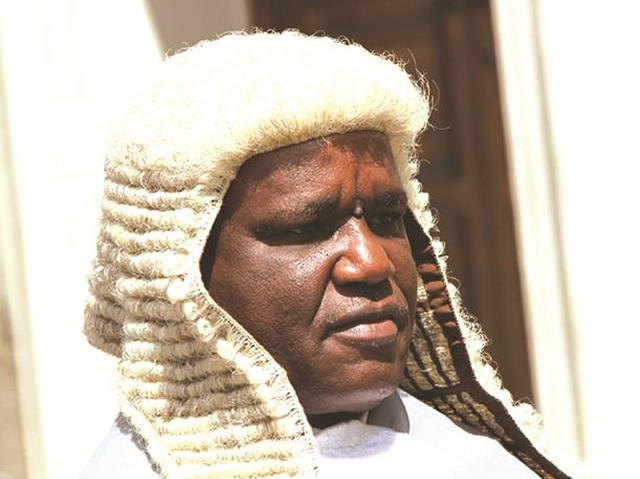 Malaba — who has outstanding legal skills, a brilliant mind, tremendous discipline, and has earned widespread support — assumed duty on March 1 as the acting Chief Justice.
He has been appointed substantive Chief Justice by President Robert Mugabe with effect from March 27, according to the Judicial Service Commission (JSC).
Chief Justice Malaba, 65, is currently out of the country on official duty, so his swearing-in as Chief Justice is expected to take place on April 6.
Four candidates were shortlisted by the JSC for the Chief Justice post and public interviews — beamed live on State television – were conducted in December last year, reflecting Mugabe’s whittled down authority under the new Constitution.
Then deputy Chief Justice Malaba, Constitutional Court judge Justice Paddington Garwe, JSC secretary Rita Makarau and Judge President Justice George Chiweshe were nominated by the JSC — a panel of mostly senior judges and lawyers — to conduct the public interviews.
The Chief Justice-designate scored 92 percent in the interviews, while Makarau garnered 90 percent and Justice Garwe came out third with 52 percent.
The choice of Malaba was seen by Munhumutapa as a significant appointment to douse worsening factional fights in the ruling Zanu PF over the next Chief Justice.
The Chief Justice job — besides overseeing the Constitutional Court and Supreme Court’s administration and lobbying on the top courts’ behalf on matters involving its docket and jurisdiction — also has a political nature, and has a key role in presidential impeachment motions and elections, which are often disputed here, hence the intense factional fights.
Malaba will head the nine-judge panel, and the appointment caps a distinguished judicial career.
Malaba has law degrees from the University of Warwick in the UK, obtained in 1974 and another one from the University of Zimbabwe, obtained in 1982.
He was registered as a legal practitioner in Zimbabwe on April 14, 1986.
Apart from an initial three years as a prosecutor in Bulawayo between 1981 to 1984, Justice Malaba is a career judicial officer, whose magisterial career started at Masvingo in 1984.
He rose steadily through the ranks of the magistracy and attained the rank of regional magistrate in 1990. He was appointed a judge of the High Court in 1994. He was promoted to the Supreme Court in July 2001 and became the country’s first Deputy Chief Justice in July 2008.
Malaba has also held an appointment as a judge of the regional trade bloc Common Market for Eastern and Southern Africa (Comesa) Court of Justice. Daily News