spot_img

Zimbabwe calls South African report on its 2002 election ‘rubbish’

Must Try

Trending

Nehanda Radio
Zimbabwe News and Internet Radio

By Ed Cropley

A senior Zimbabwean minister on Friday slammed a report by two South African judges that said Zimbabwe’s 2002 elections, won by long-time President Robert Mugabe, were not free and fair.

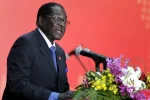
President Robert Mugabe

At the time of the vote, then South African president Thabo Mbeki glossed over observer reports of irregularities, including violence and intimidation, to declare it reflected the legitimate will of the Zimbabwean people.

But two judges commissioned by Mbeki – Sisi Khampepe and Dikgang Moseneke – compiled a separate assessment which was only released this week, after a South African newspaper won a 12-year legal battle to have it declassified.

The so-called “Khampepe report” was scathing.

“Having regard to all the circumstances, and in particular the cumulative substantial departures from international standards of free and fair elections found in Zimbabwe during the pre-election period, these elections, in our view, cannot be considered to be free and fair,” it said.

Zimbabwe’s finance minister Patrick Chinamasa – justice minister at the time of the vote – said the Khampepe report was the product of a racist South African justice system opposed to the seizures of white-owned farms taking place at the time.

“It’s rubbish. I’m telling you it’s rubbish,” Chinamasa told Reuters on the sidelines of an investment conference.

“It’s not the South African government. It’s an individual judge who is biased against us because of the land reform program,” he added.

“You know, we’ve had a lot of bad judgments by the South African courts, especially the white judges.”

Both Khampepe and Moseneke – now deputy chief justice – are black. Mbeki has not commented on the release of the Khampepe report.

Zimbabwe’s main opposition, the Movement for Democratic Change, has accused Mugabe, 90, of rigging elections and intimidating voters since 2000 – charges his ZANU-PF party denies.

After re-election last year, Mugabe’s term of office runs until 2018 and he can run again.

ZANU-PF’s leadership is currently embroiled in a battle to succeed Mugabe, the only leader Zimbabwe has known since independence from Britain in 1980, but Chinamasa denied it was of pressing domestic or international concern.

“He was voted in last year for a five-year term, so why is the issue arising?” he said. Reuters

Related Articles

President Mugabe caps Forget Mutema who graduated with First Class Bachelor of Accountancy Honours Degree at the Bindura University of Science Education’s 16th graduation ceremony in Bindura yesterday, looking on is Higher and Tertiary Education minister Professor Jonathan Moyo. —(Picture by Tawanda Mudimu)

The thinker and the tactician: Why Robert Mugabe was more intelligent than Jonathan Moyo

1
Zimbabwe has produced many politicians who could shout, scheme or survive. It has produced very few who could genuinely think. Among those few, two names inevitably surface: Robert Gabriel Mugabe and Jonathan Nathaniel Moyo.
Then Zimbabwean President Robert Mugabe speaks at a ceremony of the National Day for the Republic of Zimbabwe in Expo park in Shanghai, China, August 11, 2010 — Photo by IC Photo via DepositPhotos.com

The road not taken: Britain, Mugabe and the limits of military power

0
In the quiet release of declassified British government files, history has once again intruded into the present. The documents reveal that at the height of Zimbabwe’s political and economic crisis in the early 2000s, the United Kingdom seriously debated a range of options for removing Robert Mugabe from power, including, however briefly, the military option.
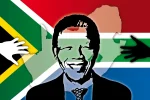
File picture of an illustration of South Africa's then president Nelson Mandela with the country's flag in the background (Picture by Frizio via DepositPhotos.com)

The Dangers of Comfortable Lies: Why Mbofana misreads Mandela and misrepresents Mugabe

3
Tendai Ruben Mbofana’s defence of Nelson Mandela on Nehanda Radio reads like an attempt to enshroud the past in bubble wrap.
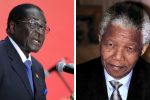
Then Zimbabwe president Robert Mugabe and Nelson Mandela of South Africa (Pictures by IC Photo via DepositPhotos.com and © John Mathew Smith 2001 - www.celebrity-photos.com via cc-by-sa-2.0.)

If Mandela was a sell-out, then what do we call Mugabe? – A response...

0
Can it get any weirder? I honestly did not know whether to laugh or cry when I read today’s Nehanda Radio op-ed accusing Nelson Mandela of “selling out” South Africa’s black majority.
Gabriel Manyati is a hard-hitting journalist and analyst delivering incisive commentary on politics, human interest stories, and current affairs.

How Mnangagwa has achieved what Mugabe could only wish for

1
Where Mugabe relied on charisma, revolutionary legitimacy and a dense web of patronage networks that often competed with one another, Mnangagwa has relied on quiet institutional capture, incremental coercion and the strategic alliance of the state with the security sector.

Don't miss a story

Breaking News straight to your inbox.

No spam just news !

0 0 votes
Article Rating
Subscribe
Notify of
0 Comments
Oldest
Newest Most Voted
Inline Feedbacks
View all comments
- Advertisement -spot_img

Latest Recipes

Latest

More Recipes Like This