In 2006 NCA activist Nixon Nyikadzino was bundled into a truck by soldiers led by a Major Kembo. They struck him on the head and eyes using clenched fists while one of them took a burning cigarette and burnt his body.
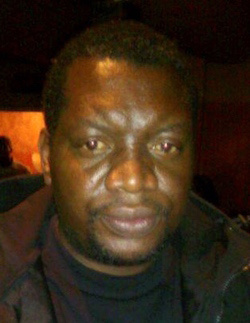 His abductors also started pulling out his dreadlocks, resulting in a lot of bleeding. He fled to South Africa and spent nearly 4 years in exile but last month Nyikadzino took a job back in Zimbabwe. He speaks to SW Radio Africa journalist Lance Guma about his return, the political environment and the coalition government.
Interview broadcast 05 August 2010
Lance Guma: Hello Zimbabwe and welcome to this edition of Behind the Headlines. My guest this week is an activist of note – his name is Nixon Nyikadzino who works for The Crisis in Zimbabwe Coalition.
Several years back he used to be a senior member of the National Constitutional Assembly (NCA) and went through the horrors of what Zimbabwe was and maybe is still right now, being tortured by members of the Mugabe regime.
He then fled to South Africa and worked there for several years and he’s now back in Zimbabwe, under the coalition government and the programme will trace how this transition has been for him. Mr Nyikadzino thank you so much for being our guest this week.
Nixon Nyikadzino: You are welcome Lance.
Guma: Right obviously you will have seen I’ve tried to summarise and be as brief as possible in my introduction but, take us through what you went through in Zimbabwe – maybe start off with what your job was at the time and what you went through before you fled to South Africa.
Nyikadzino: By the time I left for South Africa I was still a senior employee of the National Constitutional Assembly as a regional officer or a person who was managing three provinces by then which were 41 constituencies in Zimbabwe in terms of actually pushing for a new constitution.
So I was doing the expertise and management work on behalf of the National Constitutional Assembly. What led to my leaving Zimbabwe was as a result of abduction and torture that was actually perpetrated by some ZANU PF state intelligence personnel who were actually employed by ZANU PF to come and deal with me once and for all.
They came to take me from my place in Glen Norah at about at about 8pm and they took me to another place while I was blindfolded, close to Bindura, something that I later on realised at about 1 to 2 am the following morning.
A lot of things happened; you remember, if you go through the communication that was sent to the African Commission on People’s Rights, you’ll notice that a lot of things really happened, nasty things, some of the things that I cannot even tell the listeners because they really, really of people of nervous disposition because they were really nasty.
As a result of that, the National Constitutional Assembly by then, assisted by other organisations, including my current chairperson now, Mr Jonah Gokova helped me to go and seek some special treatment in South Africa.
Because I was a professional person, once I was there, I was being assisted by different organisations and Crisis in Zimbabwe Coalition, by then doing also just like the National Constitutional Assembly, saw it fit to engage me in doing some other kind of media consultancy for them, thereby realising that it was going to be an advantage for me to be in South Africa just to seek treatment and spend the whole day sitting.
And they ended up actually taking my expertise and ploughing it back into the Coalition, thereby formalising my employment there and also formalising my departure from the NCA because literally what was supposed to happen was that after three months I was supposed to go back and work for the National Constitutional Assembly, so as a result of some headhunting and agreement with the NCA I later on joined the Crisis in Zimbabwe Coalition in South Africa.
Guma: Now obviously from the trauma that you went through in Zimbabwe to life in South Africa, you probably also have an insight into what it is like to be a Zimbabwean in South Africa. What’s the typical life for a Zimbabwean in South Africa – can you just summarise what they have to go through?
Nikadzino: I can tell you because during my initial month in South Africa I was bearing the same brand just like any other refugee in South Africa, the only difference was that I hadn’t decided to take up the refugee status like my colleagues but in terms of living conditions, because I was living on a very, very minimal stipend it was really difficult to support my family back here in Zimbabwe and also to support myself, cognisant of the fact that rentals are very high in South Africa, at times even food is expensive but it’s available and that you always have expenditure, you have to pay for everything that you have to have.
So as a result of that, I came through the kind of life that Zimbabweans experience in South Africa – life whereby it’s difficult to get accommodation because you can’t afford to pay, life whereby it’s difficult to get a loaf of bread just to eat it with water just because you can’t afford to pay for that loaf of bread, walking long distances to go and look for work and when you get the work, the kind of wage you are given is not even up to standard, it will only take you to buy your food or maybe look for a small space that you can sleep and using your bag as a pillowcase.
So under those circumstances, I think life continues to be as difficult as such for Zimbabweans living in South Africa and had it not been because of the conditions that were prevailing at that time and that continue to prevail now even under this inclusive government.
I don’t think any ordinary and reasonable Zimbabwean would so decide to flee his or her country to go to a place like South Africa because opportunities even for professionals are difficult to come by because there is a plethora of competition for those opportunities, both by the locals and Zimbabweans and other nationals who think that only greener pastures can be found in South Africa here in the African continent.
Guma: Now obviously, as I’ve said in the introduction, you’ve since gone back to Zimbabwe, working for the Crisis Coalition, we like many other media organisations, received the email stating the new appointments that had been made and you’ve moved from the South African office to the office in Zimbabwe. Now let me get your initial reaction to the appointment at first when you were told you would be posted to Zimbabwe, did you have any hesitation going back?
Nyikadzino: Of course. For your information, this took a long period, by the time people began to receive the communication, the discussions had been going on for almost like more than a year so I was aware of the impending relocation to Zimbabwe, only that there were a lot of nitty gritties that needed to be dealt with, but in terms of the political situation that led me to leave Zimbabwe, I was still hesitant.
So I wanted to do an environmental scan to make sure that the environment would be capable of taking care of people of our disposition since we are victims, we are survivors of the intransigent political situation that was in place in Zimbabwe even before 27 June and as such you cannot just jump into a country when you know that you are like Daniel being thrown into a den of lions so as such I had to take that environmental scan and during that particular period, that same period where discussions were taking place and you will remember that there were several times when I was telling you that I’ve just arrived from Zimbabwe or I’m going to Zimbabwe.
So during those particular periods when I was coming to work maybe briefly for a week or briefly for two days, I was trying to scan the environment, or would try to get first hand information from colleagues to find out whether the situation had really transformed positively for activists of our nature and our capacity to be able to come back and continue to do the kind of work that we feel can be done here in Zimbabwe in order to take Zimbabwe close to where we can call it a democracy.
Guma: So in terms of being back in Zimbabwe continuously, how long have you now been back home?
Nyikadzino: Now we are in August I jumped in here, today is the 5th, so this is 30 days in Zimbabwe for me.
Guma: What would you say to people who are in a similar situation Mr Nyikadzino who have fled home and because of nostalgia and other factors, relatives dying and things like that and they want to come back home, what would you say to them?
Nyikadzino: What I would say for them is that the difference that maybe, mine is a conviction, that’s why I am here. If it had not been built on conviction then I wouldn’t have made that particular decision to be here because I almost died, I was almost killed but taking that aside, I said let me go back and see whether these people still have the guts to kill me.
If they have the guts to do that, let them do it and the world will be there to see, but I’ve never held a knife against anybody, never have I held a sword against anybody, never have I held a gun against anybody like what they do. What I have held is the word of my mouth and the pen that that speaks the truth on behalf of the people here in Zimbabwe, what every Zimbabwean cherishes and if ever there are other Zimbabweans who believe in that and who think that they can and are prepared to come and do so, then let it be.
But for those who believe that they can also be able to contribute to this economy, to the fiscus through their handouts that they send to their relatives, through also capacitating themselves in their respective countries, I would rather think that we cannot all be activists, neither can we all be comrades, neither can we all be revolutionaries. We must be able to trust each other in our different expertise and make sure that we contribute and try to disintegrate this regime, so that come the right time when we will come, everyone would say, would be able to say I have contributed a piece to make this cake a very, very sugary and a nice one.
Guma: And in the few weeks that you’ve been back home Mr Nyikadzino, what’s your assessment as someone who was initially outside the country and is now back, what’s your assessment of the coalition government, is it working?
Nyikadzino: I’m happy that you had an interview with Henry Olonga just recently, and I went through that interview, you know, the transcript and I share the same sentiment and the same analysis as Henry Olonga that what you find is the accessibility of commodities but inaccessibility of financing or funds. People are not able to have the funds. Those who used to get better pay whereby they support the majority of Zimbabweans, like the civil servants – they get 250 dollars.
To rent a room in Glen View you need 50, between 50 and 100 dollars, you are left with 150. School fees – at a boarding school if you’ve got kids is 300 to 800 dollars so that money is not enough. Where do people get the money to buy food? Nobody can answer that. In terms of the service delivery – we still have problems with water, there’s no water where I’m staying currently. I’m staying in the Avenues but I do not have access to water and currently we do not have access to electricity. It’s actually a celebration for electricity to be there in your house or in your apartment.
So in terms of the real transformation of the country itself, it’s still as difficult as possible because you have to understand that for hospitals to be working right now it is because of donor agencies, but the fiscus – if it was as strong as it should be, should be able to actually sustain the education, the health and other areas of service delivery but that is not happening so we actually a hanging country with a government that is supposed to bringing in confidence, so what is helping people to survive is the hope of the 11th of September or 15th of September when the inclusive government came into place, when the Global Political Agreement was signed and so people are still satisfied that something can happen.
It’s not because they’ve got food on their table, not that they’ve got medication on their table, not that they’ve got water in their houses, not that they’ve got education for their kids that has got a better curricular but it is because on their table there is the hope that was given by the inclusive government, that come 2010, come 2011 things will be better. And a lot of people are hanging on that and if that hope does not translate or transform into really positive things that will bring bread and butter issues for the people on the table, I can assure you that people will get back to the same frustration that they’ve been in before the negotiated settlement that we have.
Guma: And I’m also interested Mr Nyikadzino in your take on the current constitutional outreach exercise. We’re receiving reports of incidents of violence in areas like Chipinge, in fact the latest we are hearing is that the MDC might be boycotting some of the outreach meetings in protest at what is happening. What’s your take on this and do you think in the end something will come out of it?
Nyikadzino: What we always do as civil society is to be a watchdog but also to push for the better. Everyone is aware that this process is flawed but we are trying to push for a better content. If the content is going to reflect the views of the people then maybe we might be able say let us deal with this for now so that things can move forward.
But for the benefit of doubt, the truth still remains that the political environment does not allow for this process to move forward and the political environment still allows ZANU PF to use the state machinery to actually subjugate the views of the people and to suppress the people’s views and we continue to receive several cases of violence, several cases of intimidation.
Like in Nyanyadzi we understand that two weeks ago, war veterans, actually it’s about seven days ago, war veterans wanted to disturb a meeting, they wanted to chase away the outreach team led by members of parliament, only to be saved by a snake that fell down from a tree and they said that the spirit medium’s had intervened, thereby allowing the meeting to proceed. So we continue to see these manifestations of violence, intimidation and infiltration of fear amongst the people as a result of ZANU PF’s concrete machinery of propaganda and machinery of intimidation and violence.
So we don’t think that the environment is to permit that to happen but what we must continue to do is to create checks and balances to push forward to make sure that certain things that we want to see happening can happen and if they don’t happen come the time we are supposed to go for a referendum, I think civil society will be able to pass a verdict to say whether this process was worth it or if it was also a waste of people’s money and donors’ money – whether that money could have been used or supplied elsewhere.
Guma: And my final question for you and we’re running out of time so if you are brief in your answer, one of the editors at the Zimbabwe Standard wrote an article recently saying the crux of the Zimbabwe crisis is the issue of power transfer and in that article he argued that the military junta in the country is effectively in charge and that SADC and the AU should address this issue over, will the generals allow a transfer of power should Mugabe lose the next elections.
And he also further accused the MDC of concentrating on minor issues like Gono, Tomana etcetera, etcetera and not addressing this issue of power transfer. For someone recently back, are you getting this? Is this is something everyone is talking about, that the military junta is running the country?
Nyikadzino: Lance, let me be honest with you, one is we are sympathetic to some of the pro-democracy movements that we have in this country like the Movement for Democratic Change, the true fact of the matter is that even within the inclusive government we do not see that transfer of power or sharing of power. The power is still one-sided. Why it is so is because JOC or the Joint Operations Command is still in place, they are operating in some dark corridors, whilst the new one which is the National Security Council is not operational at all and they don’t wield any power.
And the true fact of the matter is that the power dynamics in Zimbabwe is militarised and where do you find the military? The military is controlled by ZANU PF and the events that have been taking place all along can show you that, or prove that the military people have been making decisions even on behalf of Robert Mugabe. There are certain events that have taken place – if you go to the parastatals, you see how militarised and criminalised it is.
You’ll find a kith and kin kind of arrangement whereby if a family have got a governor in Mashonaland West at GMB (Grain Marketing Board) you’ll find the whole village working at GMB and you’ll find that there are people who were in the youth militia who were paid there, people who have been attested into the army as youth militia who are also working at GMB just making sure that they plunder the national resources but also they get to be safe so they are working to create violence again next time.
So it will continue to be a bit difficult in Zimbabwe because even if we go to an election next year and let’s assume the MDC wins, the point or the question will be are the military people or is the military junta in Zimbabwe led by a de facto leader called Robert Mugabe, is it going to accept to transfer or to give power to that person. I still doubt – no.
So the SADC must actually be concentrating more on security reforms and also trying to deal with the political environment, disengaging, dislocating the apparatus of violence because the apparatus of violence themselves are being coordinated by the military, by the militia and such coordination if it is not dealt with at regional level, at international level, we are still going to be revolving or recycling around negotiated settlement.
That is if the military regime is going to accept another negotiated settlement, come next election, come the time when they accept that they have lost, come the time they will say no maybe we can continue to be in actually a coup d’état type of rule in Zimbabwe which will be more of a pariah state.
Guma: That was Zimbabwean activist Nixon Nyikadzino joining us on Behind the Headlines. Mr Nyikadzino thank you so much for your time.
Nyikadzino: You are welcome.
To listen to audio of programme click link below;
http://swradioafrica.streamuk.com/swradioafrica_archive/bth050810.wma
Feedback can be sent to [email protected] or http://twitter.com/lanceguma
SW Radio Africa is Zimbabwe’s Independent Voice and broadcasts on Short Wave 4880 KHz in the 60m band.
Discover more from Nehanda Radio
Subscribe to get the latest posts sent to your email.